








As April comes to a close, so does Second Chance Month, a time to focus attention on the millions of people returning from prison or jail each year. Ensuring their reentry back into communities is safe and successful matters to everyone, so it is heartening to reflect on the momentum that exists now and to begin defining the future of reentry.
A decade ago, one couldn’t imagine a reality in which more than half of the governors currently in office, from both major parties in states from California to Mississippi, highlighted reentry efforts prominently in their State of the State and inaugural speeches. And it’s not all talk; states and local governments are, in fact, seeing success. The National Reentry Resource Center, funded by the U.S. Department of Justice’s Bureau of Justice Assistance, recently profiled 11 states that have experienced impressive declines in their recidivism rates since the number was at its most recent peak in each state. Four of these states—Florida, Illinois, Massachusetts, and Ohio—saw at least a 20-percent decline in their three-year reincarceration rate in this timespan. Over the same periods, each state also saw their property and violent crime rates each drop by at least 15 percent.
Yet we are far from living in a society in which people are afforded all the opportunities and supports they need to live productive lives after serving a prison or jail sentence. The mere fact that a person did not commit a new crime represents just one definition of success—there’s more we have to accomplish. My to-do list for the next decade of reentry work includes three key priorities.
First, we must continue to broaden the reentry coalition. The criminal justice system is far from monolithic. There is a federal system operating more than 130 correctional facilities in addition to 50 separate state corrections systems, not to mention thousands of independent local jail systems and probation and parole agencies that supervise millions of adults on any given day. But corrections leaders, police, prosecutors, and judges from across these diverse systems all say the same thing: We cannot do it alone. That’s why criminal justice agencies are increasingly locking arms with those working in housing, behavioral health, employment, and other sectors to meet our reentry challenges with a unified front.
To be successful, these nascent partnerships must be grow into a fundamental shift in how these governmental and nongovernmental actors think and work. This means policy, funding, and programming decisions must be made collaboratively across multiple agencies, in a way that is inclusive of the voices of those who have been affected by the criminal justice system.
Second, we must scale what works. We now have a rich body of research on what works to reduce recidivism, and most corrections administrators now develop comprehensive plans that include these practices in a person’s reentry as a core part of their agencies’ mission statements. Yet, state and local agencies still struggle to fund and implement three essential elements across their systems. For example, when properly used, administering risk and needs assessments on people who are incarcerated is essential to ensuring they are connected to the right services and level of intensity of supervision. While nearly every state has now adopted such assessments, too many have yet to ensure the accuracy, fairness, and transparency of their use. In addition, supervision caseloads remain unmanageably high in most states, leaving probation and parole officers struggling to apply the research-backed support necessary to help a person change their behavior. For instance, in Alabama, supervision officers—who were responsible for approximately 200 individuals each—struggled to manage their caseloads, until the state invested in 100 additional staff. And far too often, treatment for addiction and mental illness is not accessible or delivered with sufficient quality to meet the needs of people likely to relapse and reoffend.
State and local policymakers must be ready and willing to invest in scaling what works while also questioning administrators about whether these practices are being implemented with fidelity.
Lastly, we must measure better and develop new knowledge. To understand whether reentry efforts are having their intended impact, elected and appointed officials need more timely access to metrics of recidivism as well as data on other measures of success, such as housing, employment, sobriety, and more. Right now, states are woefully ill-equipped to report on recidivism—at least 35 states do not currently report reconviction or rearrest data on those released from prison. While the research on what works is more robust than ever, efforts to evaluate existing and new initiatives will continue to be hindered without a transformation in how data on reentry is collected, analyzed, and shared.
These three pillars of work are not the result of weeks or months but of years of effort, and the National Reentry Resource Center is in this for the long haul. I look forward to celebrating many more Second Chance Months to come and to our country one day being so responsive to the dignity and potential of our returning citizens that a national awareness campaign no longer feels necessary.
Nicole Jarrett is the director of the National Reentry Resource Center and leads the Corrections and Reentry Division at The Council of State Governments Justice Center.
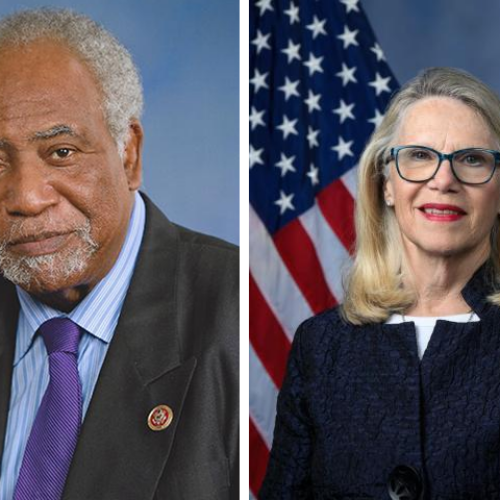
Congressmembers Miller and Davis are leading the FY 2027 push for funding the Second Chance Act.
Read More
Second Chance Funding: 95 Congressmembers Join Bipartisan Call for Reentry Services
Congressmembers Miller and Davis are leading the FY 2027 push for funding…
Read More