






Medicaid and Financing Health Care for Individuals Involved with the Criminal Justice System
The appropriate use of federal Medicaid dollars to help expand health care coverage for individuals involved with the criminal justice system presents an opportunity to achieve reductions in state and local spending, while minimizing known health and public safety concerns associated with reentry following incarceration. However, opportunities to maximize and maintain Medicaid enrollment for eligible individuals in this population, and especially to make use of Medicaid to finance certain types of care provided to those who are incarcerated, have been largely underutilized by states. This brief provides an overview of opportunities to expand health care coverage, as well as access to and continuity of care; improve public health and safety outcomes for individuals involved with the criminal justice system; and reduce state and local expenditures on corrections and health care.

Corrections leaders balance the complex priorities of maintaining public safety, operating secure facilities, providing needed care and services…
Read More
A bipartisan group of 88 lawmakers, led by Representatives Carol Miller (R-WV) and Danny Davis (D-IL), wrote a…
Read More
Last month, North Dakota Governor Kelly Armstrong signed a landmark bill to change how courts handle cases involving…
Read More
Apply Now for Resident Analyst Program to Increase Data Analysis Capacity at Departments of Corrections
Corrections leaders balance the complex priorities of maintaining public safety, operating secure facilities, providing needed care and services to the incarcerated population, and coordinating with other agencies.
Read More
Bipartisan Group of 88 Lawmakers Push for Continued Funding for Reentry and Recidivism Programs
A bipartisan group of 88 lawmakers, led by Representatives Carol Miller (R-WV) and Danny Davis (D-IL), wrote a letter calling for continued funding for the Second Chance Act in the Fiscal Year 2026 Commerce, Justice, Science, and Related Agencies appropriations bill.
Read More
Explainer: North Dakota’s New Youth Fitness-to-Proceed Law
Last month, North Dakota Governor Kelly Armstrong signed a landmark bill to change how courts handle cases involving youth with mental health concerns or who lack the developmental maturity to understand the court process.
Read More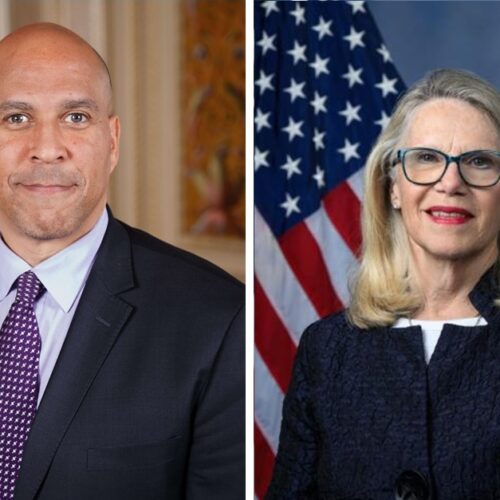 Bipartisan Group of Lawmakers Introduces Second Chance Reauthorization Act of 2025
Today, Senators Shelley Moore Capito (R-WV) and Cory Booker (D-NJ) and Representatives Carol Miller (D-WV) and Danny K. Davis (D-IL) introduced the Second Chance Reauthorization Act of 2025 in both the Senate and U.S. House of Representatives.
Read More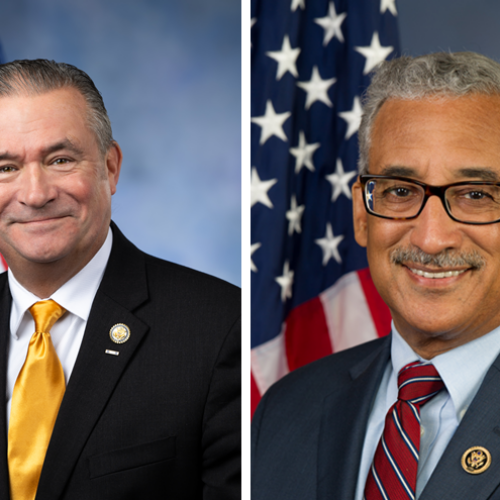 Bipartisan Group of 66 Lawmakers Support Continued Funding for the Justice and Mental Health Collaboration Program
A bipartisan group of 66 lawmakers, led by Congressmen Don Bacon (R-NE) and Bobby Scott (D-VA), wrote a letter calling for continued funding for the Justice and Mental Health Collaboration Program (JMHCP) in the Fiscal Year 2026 Commerce, Justice, Science, and Related Agencies appropriations bill.
Read More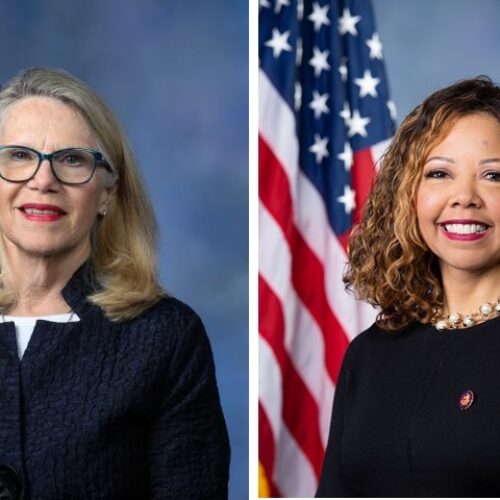 Bipartisan Group of 33 Lawmakers Promote Continued Funding for the Justice Reinvestment Initiative
A bipartisan group of 33 members of Congress, lawmakers, led by Congresswomen Carol Miller (R-WV) and Lucy McBath (D-GA), wrote a letter calling for continued funding for the Justice Reinvestment Initiative (JRI) in the Fiscal Year 2026 Commerce, Justice, Science, and Related Agencies Appropriations bill.
Read More