










Honoring Kansas State Rep. and Justice Reinvestment Initiative Legislative Champion, Russell Jennings
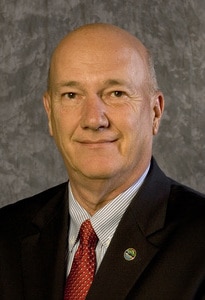
Rep. Russell Jennings
We at The Council of State Governments Justice Center were saddened to learn of the passing of Kansas State Representative Russell Jennings. Rep. Jennings was a staunch advocate for sensible criminal and juvenile justice reform who worked every day to ensure that the people in Kansas were safe, victims were supported, and that people involved in the justice system were afforded second chances to break the cycle of recidivism. Throughout his career, he advocated for laws and policies that made those second chances possible to achieve.
Rep. Jennings was well respected by his colleagues and recognized as a problem solver and someone who always worked to do what was best for Kansas. Over the years, he worked as a deputy sheriff, magistrate judge, and juvenile detention center director, which allowed him to bring extensive knowledge, experience, and expertise to conversations at the state house. His peers often looked to him for guidance on criminal justice-related issues.
“I knew Russ for twenty-five years,” said David Adkins, executive director and CEO of the Council of State Governments. “I first met him when we worked together on juvenile justice reform. We toured the state and were together for countless hours during preparation for the successful enactment of the Juvenile Justice Reform Act of 1996. I’ll miss him, but I’m proud he was someone I knew as a friend. His legacy is a better Kansas.”
As a champion of criminal justice reform, Rep. Jennings’ impact extended beyond the borders of his state and inspired others to follow the example he set forward. “The criminal and juvenile justice reform community lost a great champion with Rep. Jennings’ passing,” said Megan Quattlebaum, CSG Justice Center director. “Rep. Jennings was a model public servant who was respected and admired by members of both parties.”
Rep. Jennings’ tireless work to make communities safer and stronger will live on after him. Our hearts are with his wife Judy, and his family, friends, and colleagues during this difficult time.
Rep. Jennings image courtesy of the Kansas Legislature

The CSG Justice Center has partnered with the Pennsylvania Commission on Crime and Delinquency and CIT International to…
Read More
Our mission hasn’t changed; it’s become more essential. The following 2025 accomplishments are a testament to that enduring…
Read More
CSG Justice Center Launches First-of-Its-Kind Statewide Crisis Intervention Teams (CIT) Technical Assistance Center
The CSG Justice Center has partnered with the Pennsylvania Commission on Crime and Delinquency and CIT International to launch a first-of-its-kind statewide Technical Assistance (TA) Center.
Read More How Kentucky’s “Seth’s Law” Reduces Barriers to Care for Competency to Stand Trial and Guardianship
Read More
2025 in Review: Justice Data and Solutions for State and Local Leaders Amid Federal Change
How Kentucky’s “Seth’s Law” Reduces Barriers to Care for Competency to Stand Trial and Guardianship
Read More
2025 in Review: Justice Data and Solutions for State and Local Leaders Amid Federal Change
Our mission hasn’t changed; it’s become more essential. The following 2025 accomplishments are a testament to that enduring focus.
Read More 25 Reentry Wins in 2025: How States Are Removing Barriers to Reentry Success
From new laws and reentry councils to increased funding and lowered barriers, these wins highlight collaboration, creativity, and innovation across our Reentry 2030 network.
Read More
Job Training in Prison: Reentry 2030 States Explore Innovative Models and Partnerships
State leaders gathered for the fourth session of the Reentry 2030 Workforce Development Peer Learning Cohort.
Read More Getting the Right Response When Every Crisis Is Different: 4 States Share Lessons on Building Coordinated Crisis Systems
New Jersey, Utah, Virginia, and Washington discuss their different "Aligning Health and Safety" approaches and some of the challenges they’ve experienced.
Read More