









Ensuring Timely Access to Medicaid and SSI/SSDI for People with Mental Illness Released from Prison: Four Case Studies
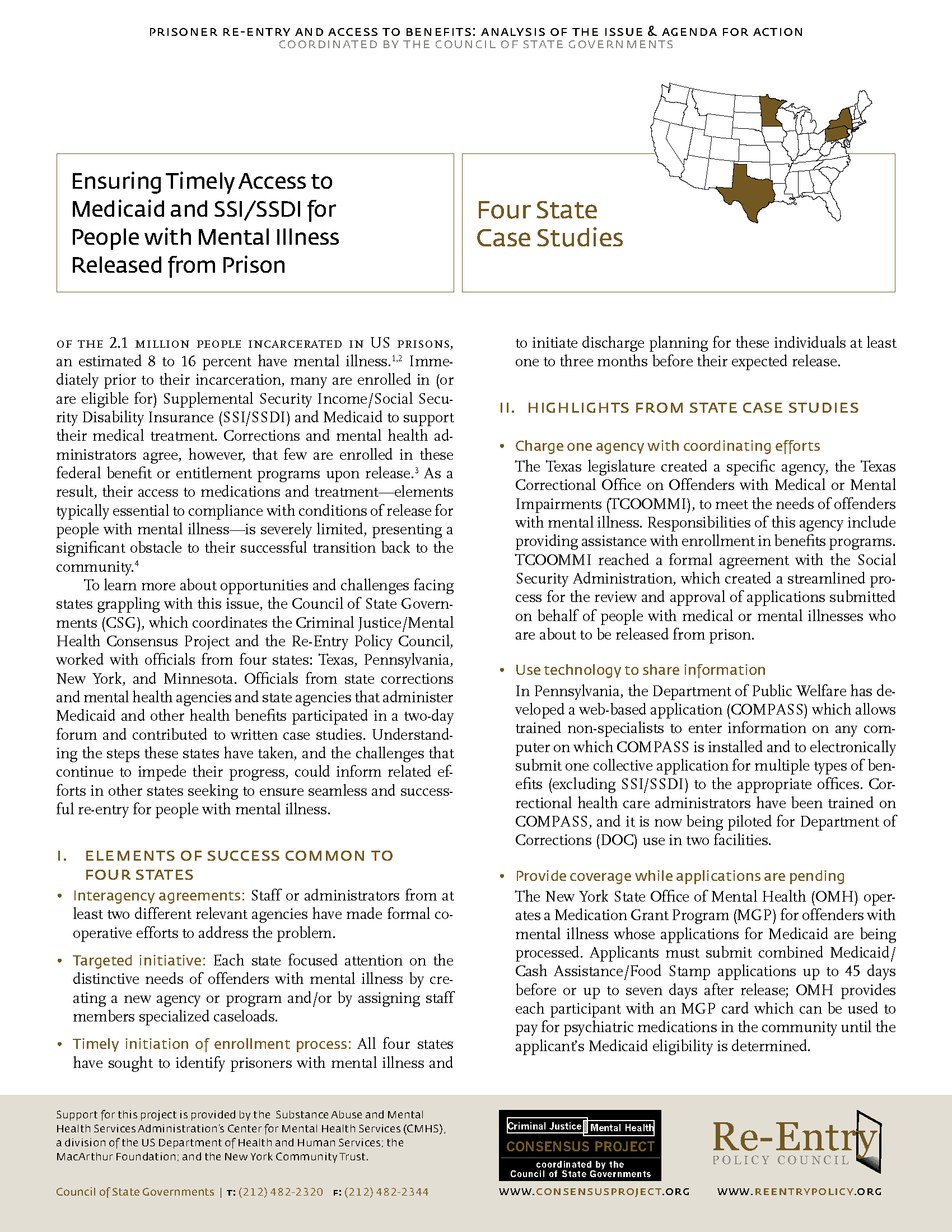
This fact sheet from the Council of State Governments Criminal Justice/Mental Health Consensus Project, in conjunction with the Re-Entry Policy Council, provides an analysis of case studies from four states, identifying common elements of success, highlights from each state, and continuing challenges to state efforts.
Among people in prison with mental illnesses, many are enrolled in (or are eligible for) Supplemental Security Income/Social Security Disability Insurance (SSI/SSDI) and Medicaid to support their medical treatment prior to incarceration, but few are enrolled in these federal benefit or entitlement programs upon release. As a result, their access to medications and treatment—elements typically essential to compliance with conditions of release for people with mental illness—is severely limited, presenting a significant obstacle to their successful transition back to the community.

In response to growing calls for police reform in New Jersey, particularly following the shootings of Najee Seabrooks…
Read More Three Things to Know About New Jersey’s Groundbreaking Community Response Legislation
In response to growing calls for police reform in New Jersey, particularly following the shootings of Najee Seabrooks and Andrew Washington in March and August 2023, a coalition of law enforcement officials, mental health professionals, and community advocates partnered to explore public safety response alternatives.
Read More Apply Now: Join a Learning Community for Community and Crisis Response Teams to Improve Responses to Youth
Read More
Apply Now: Join a Learning Community for Community and Crisis Response Teams to Improve Responses to Youth
Read More
 Apply Now: Join a Learning Community Focused on Substance Use and Overdose Community Response Programs
Read More
Apply Now: Join a Learning Community Focused on Substance Use and Overdose Community Response Programs
Read More