







Apply Now: College Campus Community Response Learning Community
********This application deadline has passed********
The Council of State Governments (CSG) Justice Center, in collaboration with the Center for Policing Equity (CPE), is hosting a virtual learning community focused on college campus community response through public health and student-centered approaches. Recognizing that calls for service on college and university campuses differ from those of the community at large, there exists an opportunity to offer students and faculty a new experience with, and new expectations for public safety systems through college campus community responder programs.
The learning community will be led by CSG Justice Center policy staff and include opportunities for mutual learning and presentations from various attendees and leaders in the field. Participants will engage in process-oriented planning to significantly enhance their campus’s crisis system as a way to divert students in crisis from jails and emergency rooms. Teams will work through a logic model, with sessions covering key topics such as goal setting, community engagement, resource mapping, stakeholder buy-in, program development, sustainability, and more. Upon completion of the learning community, teams will be equipped with an action plan for creating a community responder program on campus, including an implementation and funding plan.
The College Campus Community Response Learning Community session dates will be:
- November 30, 2023
- January 25, 2024
- March 21, 2024
- May 16, 2024
- July 25, 2024
All sessions will take place 2:00–3:30 p.m. ET via Zoom web meeting.
If you have any questions, contact Melissa McKee at mmckee@csg.org.
This application should take approximately 10 minutes to complete.
Who should apply?
This learning community is open to teams that are hoping to explore pathways to support student wellbeing and safety while diverting college and university campus community members in crisis from unnecessary contact with campus police. Applicants must have a desire to use alternative approaches to community members on campus in crisis due to conflict, substance use, and mental health in lieu of a law enforcement response.
Who should participate?
Applicants must participate as an interdisciplinary team, with each team including representatives such as (1) a behavioral health representative; (2) a first responder (from law enforcement, fire, dispatch, or emergency medical services); (3) a representative from campus-based programs such as harm reduction services, peer supports, or campus housing; (4) a student representative; and (5) a member of the college/university administration. In addition to these team members, applicants are encouraged to include a parent or family member of a student with lived experiences in substance use, mental health, or incarceration.
Photo by Keira Burton via Pexels

8 states gathered to discuss workforce solutions for formerly incarcerated people.
Read More
"It is the humane, person-centered approach that supports and stabilizes individuals, their families, and their communities."
Read More
The Judge Stephen S. Goss Memorial Award for Leadership has expanded to include Lifetime Achievement Awards and, in…
Read More
Reentry 2030 States Explore Day 1 Employment Readiness After Incarceration
8 states gathered to discuss workforce solutions for formerly incarcerated people.
Read More
Local Criminal Justice System Innovations in Mental Health Services: Q&A with CSG Justice Center Advisory Board Member Dr. Doreen Williams
"It is the humane, person-centered approach that supports and stabilizes individuals, their families, and their communities."
Read More
2025 Nominations Now Open for Judges and Psychiatrists Improving Lives and Behavioral Health
The Judge Stephen S. Goss Memorial Award for Leadership has expanded to include Lifetime Achievement Awards and, in 2024, the first-ever Team Collaboration Award.
Read More Senate Passes Second Chance Reauthorization Act of 2025
On October 9, 2025, the Senate passed the Second Chance Reauthorization Act of 2025 (S. 1843), which would continue critical recidivism-reduction and reentry services nationwide.
Read More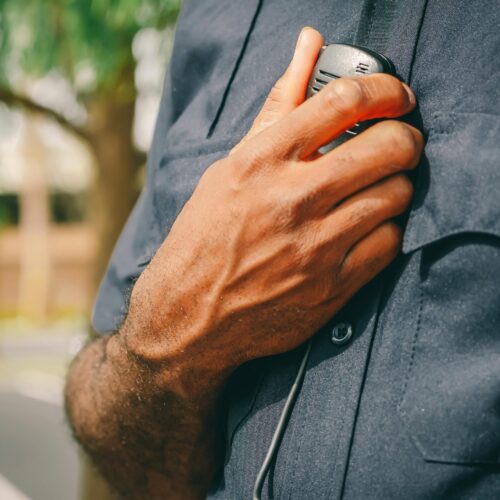 CSG Justice Center Launches First-of-Its-Kind Statewide Crisis Intervention Teams (CIT) Technical Assistance Center
The CSG Justice Center has partnered with the Pennsylvania Commission on Crime and Delinquency and CIT International to launch a first-of-its-kind statewide Technical Assistance (TA) Center.
Read More