








Connecting the Dots: Lessons Learned from a Juvenile Justice Improvement Initiative
Hosted by the National Reentry Resource Center with funding support from the U.S. Department of Justice’s Office of Juvenile Justice and Delinquency Prevention
Download a PDF of the presentation.
The Improving Outcomes for Youth (IOYouth) initiative—which is operated by the National Reentry Resource Center (NRRC)—helps state and local jurisdictions to align their juvenile justice systems’ policies and practices with what research shows works to reduce recidivism and set youth up for success. This webinar is for state and local policymakers, system leaders, agency managers, and more; and it
- Explains the research and track record of reform efforts underpinning the IOYouth approach as well as discusses why conducting a comprehensive review of system-wide policies and expenditures is critical to protecting public safety and efficient resource allocation
- Describes three states’ experiences participating in IOYouth, including the challenges that they were seeking to address; the assessment process; and the legislative, administrative, and funding changes that resulted from their efforts
- Discusses the lessons learned from each state and from the NRRC on facilitating system-wide improvement initiatives, as well as how other jurisdictions can apply these lessons to their own efforts
Presenters:
- Shanelle Johnson, Policy Analyst, The Council of State Governments Justice Center
- Ross Armstrong, Administrator, Nevada’s Division of Child and Family Services
- Nick J. Costales, Deputy Director of Field Services, New Mexico Children, Youth, and Families Department
- Adam Zarrin, Policy Advisor, Office of Colorado Governor Jared Polis
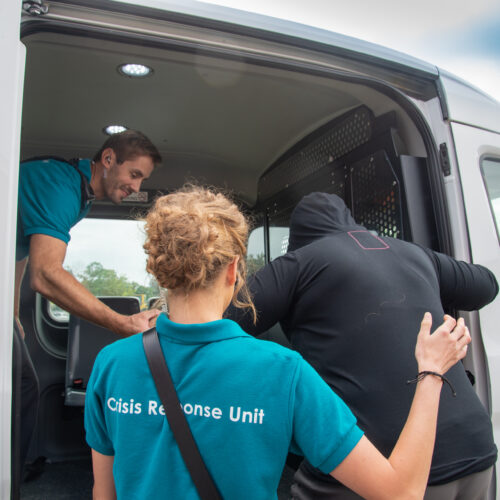
This May, the state of Washington passed legislation supporting the expansion of alternative response teams (sometimes called community…
Read More
The CSG Justice Center Advisory Board establishes the policy and project priorities of the organization. The board features…
Read More
New Mexico launched a pilot program in 2024 to divert people with mental health needs and misdemeanor charges…
Read More
Developing a Common Definition for Community Responder Programs
This May, the state of Washington passed legislation supporting the expansion of alternative response teams (sometimes called community responders) as a public safety service.
Read More
Finding Solutions to Complex Criminal Justice Issues: Q&A with New CSG Justice Center Advisory Board Member Justice Briana Zamora
The CSG Justice Center Advisory Board establishes the policy and project priorities of the organization. The board features a cross-section of leaders who shape criminal justice policy in various parts of the country.
Read More
From Courtroom to Care: 5 Key Strategies Behind New Mexico’s Competency Diversion Pilot
New Mexico launched a pilot program in 2024 to divert people with mental health needs and misdemeanor charges out of the justice system and into care.
Read More The 10-Year Impact—and Future—of Stepping Up: Facing the Behavioral Health Crisis in Jails and Communities with Real Solutions
As the Stepping Up initiative marks its 10th year, America’s justice and behavioral health systems are facing a shared crisis: how to meet the behavioral health needs of people cycling through jails.
Read More Breaking Down Barriers: Reentry 2030 States Meet to Tackle Employment-Related Collateral Consequences
On June 26, the CSG Justice Center convened state leaders in workforce development, education, and corrections from 7 Reentry 2030 states for the second session of the Reentry 2030 Workforce Development Peer Learning Cohort.
Read More How Embedded Data Analysts Are Transforming State Corrections Systems
While corrections agencies across the country collect vast amounts of…
Read More