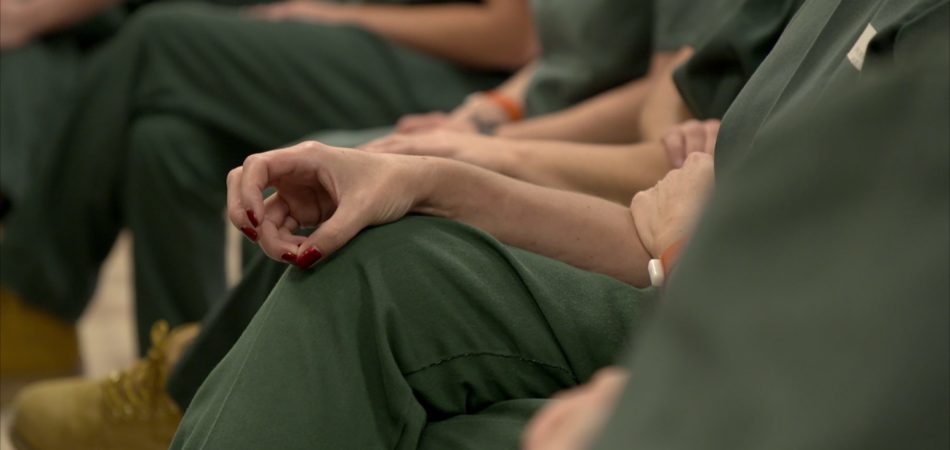






When Sharon Hadley (left) arrived at Santa Maria Hostel in July 2012, she had just completed the latest in her decade-long string of sentences for drug-related offenses.
“Now that I look back over my life, I can see how the wheels started coming off even before I really knew it,” Hadley said. “I recidivated 13 times. Each incarceration was longer and longer, and I was more and more hopeless.”
Back then, Santa Maria Hostel—a longstanding provider of reentry services for women returning to Harris County, Texas, from the Harris County Jail and nearby prisons—was just starting to test out a new idea: recovery coaching. Through Paths to Recovery, a Second Chance Act-funded program, Santa Maria Hostel paired women who were in need of post-release substance use treatment with a coach to guide them through every step of their recovery.
When Hadley first started the Paths to Recovery program, she felt overwhelmed by the pressure of hurdles like finding permanent housing and searching for a job, she said. But in between her daily sessions of clinical treatment and other reentry services, her recovery coach helped her attend to the small tasks that gave her vital momentum, such as “making it to important meetings and appointments that I couldn’t miss.”
“[My coach] showed me how to break … big goals into smaller goals, and how to work to meet them,” Hadley said. “She gave me a recovery wellness plan so that I could [figure out] what I wanted my life to look like.”
Hadley has not reoffended since she came to the Santa Maria Hostel more than five years ago. Additionally, since completing her recovery programming, she was certified as a recovery coach to work with other women leaving correctional facilities in her community.
“I get to introduce myself as a woman in long-term recovery,” she said of her role as a coach, which she often initiates with program participants in the days leading up to their release from prison or jail. “We go there and start with them making [a] commitment to their recovery, knowing that they won’t do it alone. We will pick you up, we will connect you to services. … It makes all the difference in the world.” Learn more about the Second Chance Act.
Learn more about the Second Chance Act

"It is the humane, person-centered approach that supports and stabilizes individuals, their families, and their communities."
Read More
The Judge Stephen S. Goss Memorial Award for Leadership has expanded to include Lifetime Achievement Awards and, in…
Read More
On October 9, 2025, the Senate passed the Second Chance Reauthorization Act of 2025 (S. 1843), which would…
Read More
Local Criminal Justice System Innovations in Mental Health Services: Q&A with CSG Justice Center Advisory Board Member Dr. Doreen Williams
"It is the humane, person-centered approach that supports and stabilizes individuals, their…
Read More
2025 Nominations Now Open for Judges and Psychiatrists Improving Lives and Behavioral Health
The Judge Stephen S. Goss Memorial Award for Leadership has expanded to…
Read More
Senate Passes Second Chance Reauthorization Act of 2025
On October 9, 2025, the Senate passed the Second Chance Reauthorization Act…
Read More CSG Justice Center Launches First-of-Its-Kind Statewide Crisis Intervention Teams (CIT) Technical Assistance Center
The CSG Justice Center has partnered with the Pennsylvania Commission on Crime…
Read More How Kentucky’s “Seth’s Law” Reduces Barriers to Care for Competency to Stand Trial and Guardianship
Read More
How Kentucky’s “Seth’s Law” Reduces Barriers to Care for Competency to Stand Trial and Guardianship
Read More
 2025 in Review: Justice Data and Solutions for State and Local Leaders Amid Federal Change
Our mission hasn’t changed; it’s become more essential. The following 2025 accomplishments…
Read More