








On January 15, 2022, in a horrific and unprovoked act of violence, Michelle Go was killed after being pushed onto subway tracks in New York City, where the CSG Justice Center is headquartered. As her loved ones have shared, Ms. Go was a “brilliant, kind, and intelligent woman who loved her family and friends, loved to travel the world and to help others.”
The investigation is ongoing and there is still information to learn, but we do know Ms. Go was an Asian American woman. We also know that, before killing Ms. Go, the man who attacked her approached another woman who moved away from him in fear.
The United Nations has called violence against women the “shadow pandemic”; it released survey results in December in which women describe feeling less safe in public today than they did prior to the emergence of COVID-19. The United States was not included in this study, but we know that one-quarter of American women experience sexual or physical violence and/or stalking. The work our victims team is doing to support states to improve their responses to domestic violence is, tragically, timelier than ever.
And while violence against Asian Americans is not new in our country, in New York City alone there has been a more than 300 percent increase in hate crimes against Asians during the last year. Today, as we remember Ms. Go, I reaffirm my personal commitment, as well as the CSG Justice Center’s as a whole, to stand in support of the Asian Americans and Pacific Islanders (AAPI) community and our AAPI colleagues.
News stories suggest that the man who committed this act is someone known to city officials as a person who has experienced homelessness and mental health issues. By no means do these facts absolve him or make Ms. Go’s death any less horrific. However, this information provides context that we are, unfortunately, quite familiar with in our work. We know that many jurisdictions struggle to meet the needs of individuals with behavioral health conditions, which can result in people cycling through jails, emergency departments, and homeless shelters. While there are no accurate data to support a belief that people with mental illness are more likely to be violent toward others than people without mental illnesses, suffering invariably results when people fail to get the help they need.
Much of our work at the CSG Justice Center involves working with state and local leaders to improve responses to individuals experiencing these issues, particularly supporting coordination efforts between the justice and behavioral health systems. Implementing comprehensive and collaborative crisis response strategies can help ensure that people experiencing behavioral health crises are better served and have less contact with the justice system, as well as increase public safety.
Simply put, Ms. Go’s death is a tragedy. Our hearts are with her family and friends who are grieving for their loss. They have our deepest condolences.

On May 30, 2025, the White House released the budget request for Fiscal Year (FY) 2026.
Read More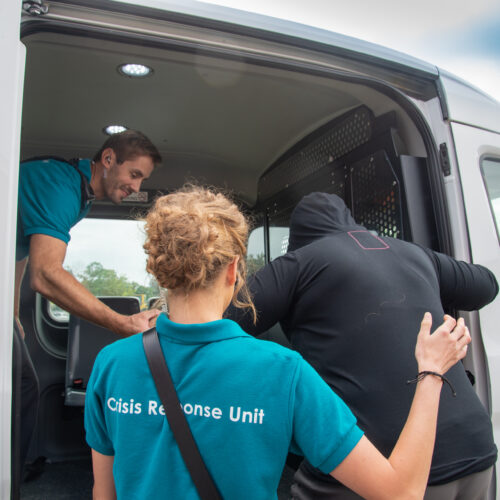
This May, the state of Washington passed legislation supporting the expansion of alternative response teams (sometimes called community…
Read More
The CSG Justice Center Advisory Board establishes the policy and project priorities of the organization. The board features…
Read More
President’s FY26 Budget Maintains Funding for Key Justice and Behavioral Health Programs Amid Proposed Structural Changes
On May 30, 2025, the White House released the budget request for Fiscal Year (FY) 2026.
Read More
Developing a Common Definition for Community Responder Programs
This May, the state of Washington passed legislation supporting the expansion of alternative response teams (sometimes called community responders) as a public safety service.
Read More
Finding Solutions to Complex Criminal Justice Issues: Q&A with New CSG Justice Center Advisory Board Member Justice Briana Zamora
The CSG Justice Center Advisory Board establishes the policy and project priorities of the organization. The board features a cross-section of leaders who shape criminal justice policy in various parts of the country.
Read More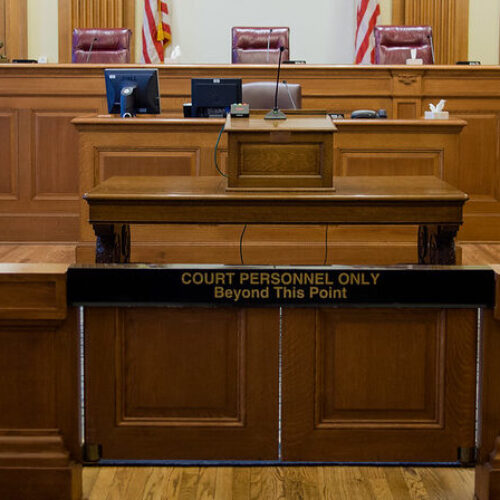 From Courtroom to Care: 5 Key Strategies Behind New Mexico’s Competency Diversion Pilot
New Mexico launched a pilot program in 2024 to divert people with mental health needs and misdemeanor charges out of the justice system and into care.
Read More The 10-Year Impact—and Future—of Stepping Up: Facing the Behavioral Health Crisis in Jails and Communities with Real Solutions
As the Stepping Up initiative marks its 10th year, America’s justice and behavioral health systems are facing a shared crisis: how to meet the behavioral health needs of people cycling through jails.
Read More Breaking Down Barriers: Reentry 2030 States Meet to Tackle Employment-Related Collateral Consequences
On June 26, the CSG Justice Center convened state leaders in workforce development, education, and corrections from 7 Reentry 2030 states for the second session of the Reentry 2030 Workforce Development Peer Learning Cohort.
Read More