





Honoring National Crime Victims’ Rights Week and Sexual Assault Awareness Month
Crime victimization is an all-too-common experience across the country. In 2021, an estimated 2.7 million people aged 12 or older experienced at least one violent crime. Of those, less than half (46 percent) of violent victimizations were reported to police. Approximately 9 percent of violent victimizations resulted in a victim receiving assistance from a victim service provider. Other types of nonviolent crime, such as property crime or theft, impacted over 8 million households.
Not all populations face victimization at the same rates. Individuals who are LGBTQ+, BIPOC, or who have disabilities face higher rates of victimization. These individuals also face additional challenges to accessing services, such as linguistic, cultural, physical, financial, or geographic barriers.
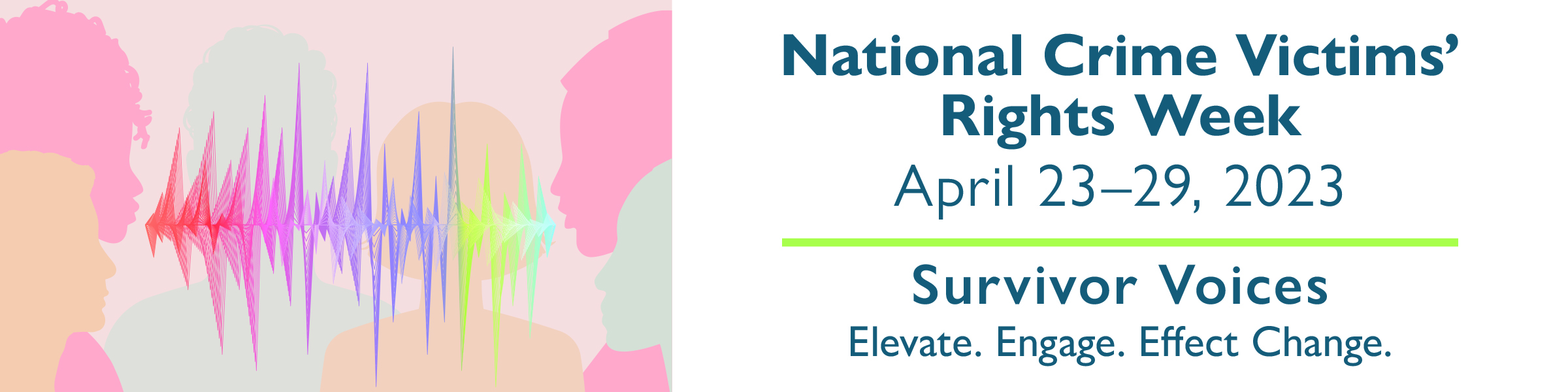
National Crime Victims’ Rights Week
National Crime Victims’ Rights Week (NCVRW) has been observed nationally since 1981 to draw attention to victims’ rights and services. During this week in April, communities across the country reflect on dynamics of victimization and how crime victimization impacts individuals, families, and communities.
Communities nationwide also take this time to honor crime victims and highlight policies, programs, and practices that support victims of crime. These efforts increase local and national awareness of, and access to, services and supports for crime victims and their loved ones. The Office for Victims of Crime leads national efforts supporting communities throughout the country in their observances of NCVRW, including awards and events; community awareness projects; and outreach materials, such as videos and public service announcements.
Sexual Assault Awareness Month
April is also Sexual Assault Awareness Month (SAAM). Though efforts related to sexual assault awareness have been championed since the 1940s and 50s, primarily by communities of Black women, the first official SAAM took place in 2001. SAAM is about awareness as well as prevention of sexual assault, harassment, and abuse and is coordinated by the National Sexual Violence Resource Center and the Resource Sharing Project.
Defining “Victim”
Despite the name of NCVRW, individuals who are victimized may identify in many ways. While victims are typically thought of as individuals who have been harmed or injured as a result of a crime, not all people who have been victimized identify as victims. They may instead see themselves as survivors, or may not even identify as having been victimized at all. Harms and injuries are also expansive; harms may be physical, emotional, financial, spiritual, and more. Considering the many ways in which harm may be incurred and experienced, it is vital for individuals who have been victimized to determine how to define their process and identity.
The CSG Justice Center’s Work to Support Crime Victims
Through a variety of projects, the CSG Justice Center seeks to understand and elevate the experiences of crime victims. Collaborating with jurisdictions across the country, the CSG Justice Center works to increase services and improve systemic responses for victims of crime. Current efforts focus on restitution, victim compensation, and domestic violence.
Additional Resources
National Crime Victims Week
- Office for Victims of Crime (OVC) – Theme: “Survivor Voices: Elevate. Engage. Effect. Change.” (artwork, screensavers, themes)
- National Organization for Victim Assistance (NOVA) (calendar of events including speakers)
- Homicide Survivors Inc. (video collage, workshop information)
- Victims Assistance Program (information)
Sexual Assault Awareness Month
- Sisters of Color Ending Sexual Assault (resources, Information)
- National Alliance to End Sexual Violence (resources, policy, news, information)
- National Sexual Violence Resource Center (news, graphics, blogs)
- Coalition to Stop Violence Against Women (resources, call to action)
- National Organization of Asians and Pacific Islanders Ending Sexual Violence (resources, news, videos, podcasts)
- It’s On US (college campuses fighting sexual assault)
- RAINN (resources, information, hotline)
- Futures without Violence (resources, events)
- Esperanza United (resources, news)
National Hotlines
- National Domestic Violence Hotline
- 1–800–799–7233
- 24/7 availability
- Love is Respect National Teen Dating Abuse
- Text: 22522; 24/7 availability text/call
- Strong Hearts Native Helpline
- 1–844–762–8483; Mon–Fri 9:00 a.m.–5:30 p.m. ET
- Lesbian, Gay, Bisexual, and Transgender National Hotline
- Hotline: 1–888–843–4564
- Youth Talkline: 1–800–246–7743
- Senior Helpline: 1–888–234–7243
- Email: help@LGBThotline.org
- Hours vary
- Rape, Abuse, and Incest National Network (RAINN) National Sexual Assault Hotline
- Hotline: 1–800–656–4673
- Availability 24/7
- National Human Trafficking Hotline
- Hotline: 1–888–373–7888
- Text: 233733
- 988 Suicide and Crisis Lifeline
- Lifeline: 988

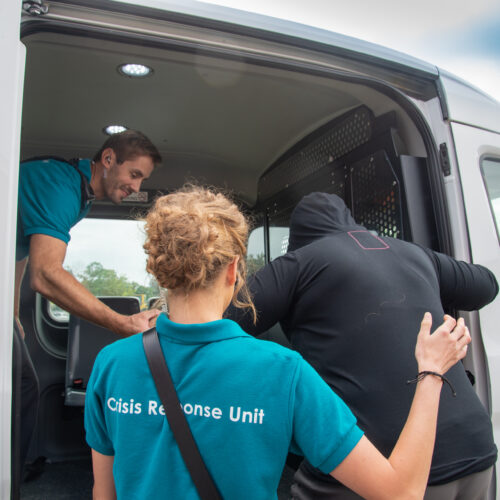
This May, the state of Washington passed legislation supporting the expansion of alternative response teams (sometimes called community…
Read More
The CSG Justice Center Advisory Board establishes the policy and project priorities of the organization. The board features…
Read More
New Mexico launched a pilot program in 2024 to divert people with mental health needs and misdemeanor charges…
Read More
Developing a Common Definition for Community Responder Programs
This May, the state of Washington passed legislation supporting the expansion of alternative response teams (sometimes called community responders) as a public safety service.
Read More
Finding Solutions to Complex Criminal Justice Issues: Q&A with New CSG Justice Center Advisory Board Member Justice Briana Zamora
The CSG Justice Center Advisory Board establishes the policy and project priorities of the organization. The board features a cross-section of leaders who shape criminal justice policy in various parts of the country.
Read More
From Courtroom to Care: 5 Key Strategies Behind New Mexico’s Competency Diversion Pilot
New Mexico launched a pilot program in 2024 to divert people with mental health needs and misdemeanor charges out of the justice system and into care.
Read More The 10-Year Impact—and Future—of Stepping Up: Facing the Behavioral Health Crisis in Jails and Communities with Real Solutions
As the Stepping Up initiative marks its 10th year, America’s justice and behavioral health systems are facing a shared crisis: how to meet the behavioral health needs of people cycling through jails.
Read More Breaking Down Barriers: Reentry 2030 States Meet to Tackle Employment-Related Collateral Consequences
On June 26, the CSG Justice Center convened state leaders in workforce development, education, and corrections from 7 Reentry 2030 states for the second session of the Reentry 2030 Workforce Development Peer Learning Cohort.
Read More How Embedded Data Analysts Are Transforming State Corrections Systems
While corrections agencies across the country collect vast amounts of…
Read More