






Explainer: The Significance of Michigan’s Justice for Kids and Communities Legislation
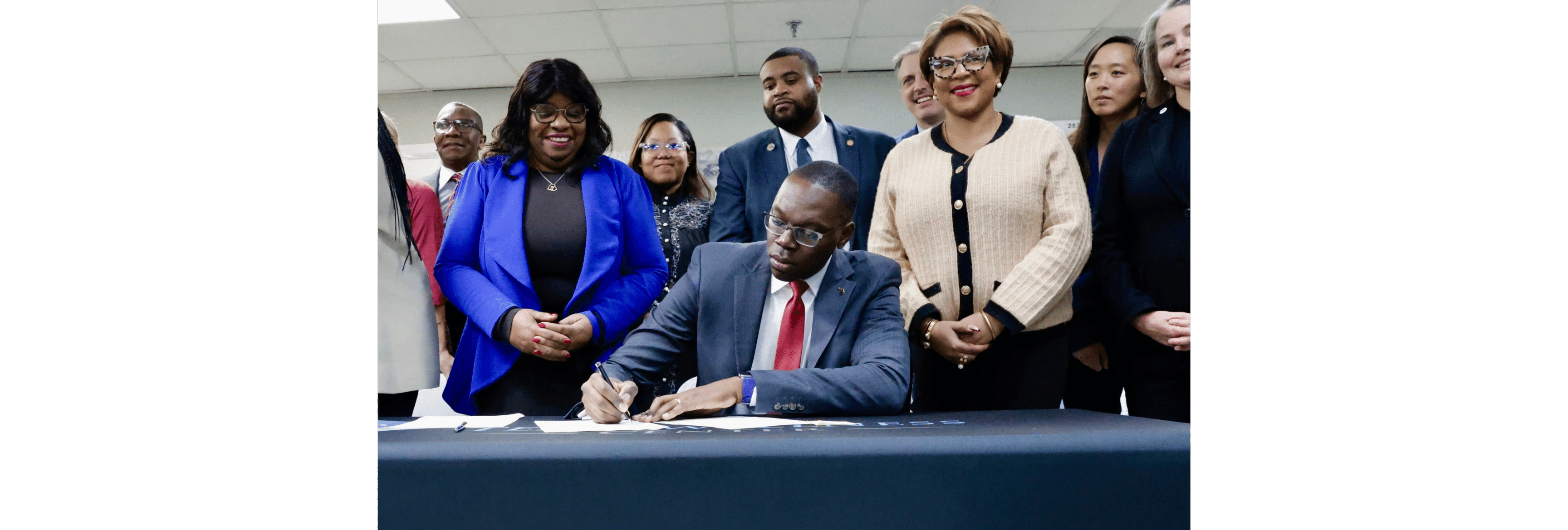
On December 12, 2023, Michigan Lt. Governor Garlin Gilchrist II signed into law the most ambitious juvenile justice reforms in the state to date: the bipartisan Justice for Kids and Communities bill package. The bills are designed to improve youth outcomes, strengthen public safety, and use state resources more efficiently. Some of the key provisions include incentivizing the use of state resources for community-based services in lieu of residential placement, requiring the use of objective decision-making tools, expanding the use of pre-court diversion, and eliminating most juvenile fines and fees.
The legislative package is the result of the state’s first-ever comprehensive review of its juvenile justice system and recommendations that came out of Michigan’s Task Force on Juvenile Justice Reform, which was established in July 2021 by Governor Gretchen Whitmer.
Here’s what you need to know about the Justice for Kids and Communities Bill Package.
1. Why Is this Legislation Needed?
Approximately half of all petitions to juvenile court in Michigan are for status offenses (such as truancy or curfew violations) and low-level, non-person delinquency offenses, including a significant number of children under 12 years old. These youth would be better served outside of the juvenile justice system, enabling the system to prioritize limited resources for youth with the highest public safety risk. Data also shows that over 60 percent of youth placed in detention have committed a status or misdemeanor offense as their most serious offense. Costly and limited detention beds should be prioritized for kids who are a threat to community safety.
Additionally, there is a great deal of inconsistency across the state in whether or how the juvenile justice system adheres to research-based policies and practices, including the use of objective decision-making tools. These inconsistencies result in disparate outcomes for kids and inequitable access to services. Further, there are limited quality assurance structures and policies in place to ensure that community-based and facility services and practices are effective or high quality.
2. What Does this Legislation Mean for Youth in Michigan?
This legislation will help ensure that youth in Michigan are matched appropriately with services that can address their individualized needs, while also holding them accountable for their actions. The legislation also creates a floor of research-based policies and practices that all jurisdictions across the state will have to adhere to starting in October 2024. Importantly, while the package establishes consistent statewide guidelines, it also guarantees that jurisdictions will maintain local discretion and flexibility to address the unique needs of each community.
Key provisions include the following:
- Enhance the Child Care Fund, the primary juvenile justice funding vehicle in Michigan, by establishing a minimum framework of juvenile justice best practices statewide. This includes requirements for counties to consistently use validated risk screening and assessment tools across Michigan’s juvenile justice system continuum to inform diversion, detention, and dispositional decision-making.
- Changes to the Child Care Fund also include increasing the state’s reimbursement rate for community-based services and supervision. This will incentivize and support counties and Tribes to develop, expand, and strengthen the use of community-based services and formal alternatives to detention and incarceration to include pre-arrest diversion.
- Eliminate most non-restitution fees and costs associated with juvenile justice system involvement, including costs of care, services, and court-appointed representation. The legislation also removes the parent or guardian burden to pay for costs associated with diversion services and ensures that youth are no longer placed outside of their home solely for nonpayment or refusal to perform community services.
- Create more rights for youth and families involved in the juvenile justice system. This involves expanding the State Appellate Defender Office to include appellate services for youth and expanding the Office of the Child Advocate to include investigations and reports in juvenile justice facilities in addition to child welfare facilities.
3. How Were the Recommendations Developed?
Governor Whitmer established the Task Force on Juvenile Justice Reform in July 2021 through an executive order. The purpose of the Task Force was to analyze the state’s juvenile justice system and identify areas for improvement that would promote public safety, advance racial and ethnic equity within the system, and improve outcomes for youth.
The process was part of the nationwide Improving Outcomes for Youth (IOYouth) initiative, where state and local governments partner with outside experts to align their juvenile justice policies, practices, and resource allocation decisions with data-driven research. The CSG Justice Center helped the bipartisan Task Force undertake a comprehensive, data-driven review of the juvenile system. In July 2022, the Task Force reached consensus on a set of research-based policy recommendations that were translated into legislation.
4. What’s Next for Michigan?
Michigan stakeholders are already hard at work preparing for implementation of the Justice for Kids and Communities legislation, most of which will take effect in October 2024. The state has established working groups and advisory committees consisting of stakeholders across branches of government and jurisdictions to develop new policies and procedures to align with the legislation.
Additionally, Michigan is working on implementing the remaining recommendations of the Task Force that do not require statutory changes. This includes creating a new juvenile justice division within the State Court Administrative Office to support local courts with juvenile justice improvement efforts and establishing a statewide residential advisory committee to address problems in the detention and residential placement system in Michigan.
Photo credit: Office of Lt. Governor Garlin Gilchrist II.
About the author


The CSG Justice Center has partnered with the Pennsylvania Commission on Crime and Delinquency and CIT International to…
Read More
Our mission hasn’t changed; it’s become more essential. The following 2025 accomplishments are a testament to that enduring…
Read More
CSG Justice Center Launches First-of-Its-Kind Statewide Crisis Intervention Teams (CIT) Technical Assistance Center
The CSG Justice Center has partnered with the Pennsylvania Commission on Crime and Delinquency and CIT International to launch a first-of-its-kind statewide Technical Assistance (TA) Center.
Read More How Kentucky’s “Seth’s Law” Reduces Barriers to Care for Competency to Stand Trial and Guardianship
Read More
2025 in Review: Justice Data and Solutions for State and Local Leaders Amid Federal Change
How Kentucky’s “Seth’s Law” Reduces Barriers to Care for Competency to Stand Trial and Guardianship
Read More
2025 in Review: Justice Data and Solutions for State and Local Leaders Amid Federal Change
Our mission hasn’t changed; it’s become more essential. The following 2025 accomplishments are a testament to that enduring focus.
Read More 25 Reentry Wins in 2025: How States Are Removing Barriers to Reentry Success
From new laws and reentry councils to increased funding and lowered barriers, these wins highlight collaboration, creativity, and innovation across our Reentry 2030 network.
Read More
Job Training in Prison: Reentry 2030 States Explore Innovative Models and Partnerships
State leaders gathered for the fourth session of the Reentry 2030 Workforce Development Peer Learning Cohort.
Read More Getting the Right Response When Every Crisis Is Different: 4 States Share Lessons on Building Coordinated Crisis Systems
New Jersey, Utah, Virginia, and Washington discuss their different "Aligning Health and Safety" approaches and some of the challenges they’ve experienced.
Read More