







Honoring Dr. Martin Luther King Jr.’s Work to Fight Inequity and Racism in the Criminal Justice System
“Injustice anywhere is a threat to justice everywhere. We are caught in an inescapable network of mutuality, tied in a single garment of destiny. Whatever affects one directly affects all indirectly.”
– Dr. Martin Luther King Jr. in “Letter from Birmingham Jail”
Although maybe best known for his work on voting and civil rights, Dr. Martin Luther King Jr. was also supremely invested in criminal justice reform. He wrote and spoke about the “long and desolate night of our court injustice” and the racism that Black Americans face in the criminal justice system. He also regularly called on his fellow Americans, especially White Americans, to face these truths head on.
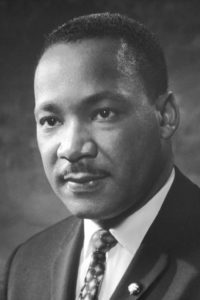 Almost 60 years later, our criminal justice system is still plagued by too many of the systemic problems Dr. King condemned. Racial inequity abounds at every point of the justice system — from arrest rates to incarceration, people of color are overrepresented. This is not because they commit more crimes; it is because of system inequities that disproportionately punish people of color. Indeed Black and Hispanic adults are more than five times and nearly three times more likely to end up in prison than White adults, respectively. When in contact with police, people of color disproportionately experience use of force, and Black people are three times more likely to be killed than White people. Unfortunately, the juvenile justice system is no different. Black youth are more likely to be arrested than youth of other races, and are confined at four times the rate of White juveniles.
In the past two years, we have seen how a global pandemic has only exacerbated existing inequities, not only in the justice system, but in behavioral health and crisis response systems as well.
Despite these challenges, there is still room for Dr. King’s conviction that the “forces of evil and injustice cannot survive.” His hope was not one that denied current circumstances, but he believed that when people of “goodwill” came together “to speak out and act on their basic convictions,” deep and lasting change was possible. In 2020, many people took up Dr. King’s charge with renewed energy and focus. In the wake of the death of George Floyd, our country saw the continued blossoming of a new civil rights movement, which is demanding changes to the way the justice system treats Americans of color. Courageous and creative leaders in state and local government are responding, partnering with community groups to both break down racial disparities within their justice systems and build up needed services and supports to permit people to be successful in their communities.
We at The Council of State Governments Justice Center are committed to ensuring our justice system lives up to its highest ideals. Through our work, we are continuing to assist our state and local partners as they create and implement policies to reduce recidivism, improve outcomes for individuals involved in the justice system, and connect people with critical supports and treatment, ultimately breaking cycles of incarceration.
Today, we take time to remember and celebrate Dr. King’s legacy. We recommit to our mission to work with policymakers to dismantle racial inequalities and improve public safety, advancing health, opportunity, and equity for every American.

Corrections leaders balance the complex priorities of maintaining public safety, operating secure facilities, providing needed care and services…
Read More
The CSG Justice Center is pleased to announce 5 new members of its advisory board. Hailing from states…
Read More
The CSG Justice Center Advisory Board establishes the policy and project priorities of the organization. The board features…
Read More
Apply Now for Resident Analyst Program to Increase Data Analysis Capacity at Departments of Corrections
Corrections leaders balance the complex priorities of maintaining public safety, operating secure facilities, providing needed care and services to the incarcerated population, and coordinating with other agencies.
Read More
Five New CSG Justice Center Board Members Look to Strengthen Communities and Improve Public Safety
The CSG Justice Center is pleased to announce 5 new members of its advisory board. Hailing from states across the country and representing multiple professions, they are all eager to join the 17 current members in establishing the policy and project priorities for the organization.
Read More
Removing Barriers to Successful Reentry: Q&A with New CSG Justice Center Advisory Board Member Dr. Ronald F. Day
The CSG Justice Center Advisory Board establishes the policy and project priorities of the organization. The board features a cross-section of leaders who shape criminal justice policy in various parts of the country.
Read More Transforming Lives with Access to Needed Mental Health Care: Q&A with New CSG Justice Center Advisory Board Member Dr. Courtney Harvey
The CSG Justice Center Advisory Board establishes the policy and project priorities of the organization. The board features a cross-section of leaders who shape criminal justice policy in various parts of the country.
Read More Six States Commit to Improving Statewide Strategies to Address Youth Crime, Violence and Behavioral Health
The Council of State Governments (CSG) Justice Center has launched the Collaborating for Youth and Public Safety Initiative (CYPSI) in partnership with six states: California, New Mexico, New York, Ohio, Oklahoma, and Rhode Island. The initiative will help states develop, fund, and effectively implement a research-based service continuum to improve public safety and behavioral health, education, and other outcomes for youth.
Read More Statement by The Council of State Governments Justice Center on Termination of Public Safety Grants
Washington, DC – Termination of bipartisan Department of Justice grants appropriated by Congress last week drew the attention of leaders and organizations across the country.
Read More