







Experts Consider Developmentally Appropriate Responses to Young Adults in the Justice System at Harvard Meeting
In partnership with the Harvard Kennedy School’s Program in Criminal Justice Policy and Management, the CSG Justice Center convened in late February a meeting of researchers, policymakers, and criminal and juvenile justice agency leaders, who engaged in discussion about translating developmental research into practice in order to improve outcomes for young adults in the justice system. Participants included leaders from Roca and UTEC, two Second Chance Act grantees that provide services to this population and have been lauded for their innovative programming by the National Institute of Justice’s Environmental Scan of Developmentally Appropriate Criminal Justice Responses to Justice-Involved Young Adults.
Learn more about approaches to young adults in the justice system from the CSG Justice Center and Harvard’s Program in Criminal Justice Policy and Management.

Our mission hasn’t changed; it’s become more essential. The following 2025 accomplishments are a testament to that enduring…
Read More
From new laws and reentry councils to increased funding and lowered barriers, these wins highlight collaboration, creativity, and…
Read More How Kentucky’s “Seth’s Law” Reduces Barriers to Care for Competency to Stand Trial and Guardianship
Read More
2025 in Review: Justice Data and Solutions for State and Local Leaders Amid Federal Change
Our mission hasn’t changed; it’s become more essential. The following 2025 accomplishments…
Read More
25 Reentry Wins in 2025: How States Are Removing Barriers to Reentry Success
From new laws and reentry councils to increased funding and lowered barriers,…
Read More
Job Training in Prison: Reentry 2030 States Explore Innovative Models and Partnerships
State leaders gathered for the fourth session of the Reentry 2030 Workforce…
Read More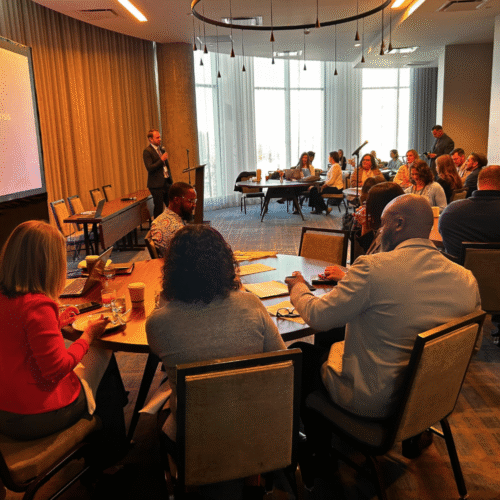 Getting the Right Response When Every Crisis Is Different: 4 States Share Lessons on Building Coordinated Crisis Systems
New Jersey, Utah, Virginia, and Washington discuss their different "Aligning Health and Safety"…
Read More DOJ and DOL Announce $155.5M in Federal Funding Opportunities for Reentry, Community Supervision, Behavioral Health, Youth, and Incarcerated Parents
Application deadlines range from March 19–April 6, 2026.
Read More