








Bipartisan Group of Lawmakers Introduces Second Chance Reauthorization Act of 2025
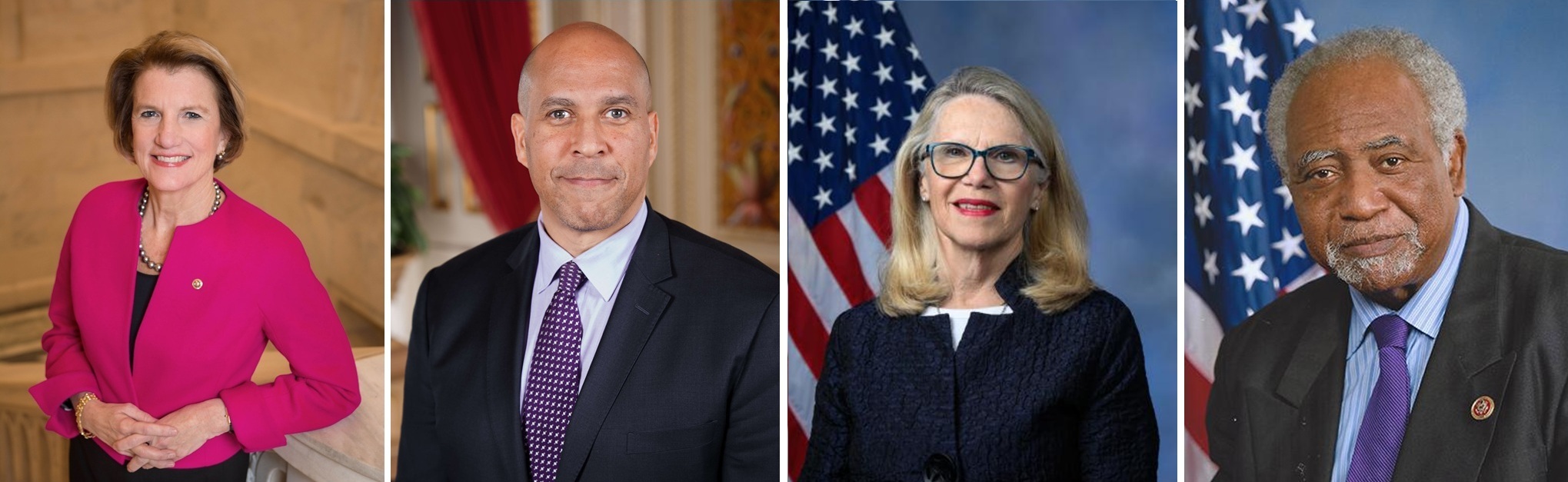
From left to right: Senators Shelley Moore Capito (R-WV) and Cory Booker (D-NJ) and Representatives Carol Miller (D-WV) and Danny K. Davis (D-IL)
Today, Senators Shelley Moore Capito (R-WV) and Cory Booker (D-NJ) and Representatives Carol Miller (D-WV) and Danny K. Davis (D-IL) introduced the Second Chance Reauthorization Act of 2025 in both the Senate and U.S. House of Representatives. The bipartisan act would ensure the continuation of critical reentry services for people returning from incarceration including housing, education, substance use disorder treatment, and job training.
Bipartisan Support
The 2025 bill has received wide bipartisan support. Co-sponsors include Senators John Cornyn (R-TX), Dick Durbin (D-IL), Thom Tillis (R-NC), Sheldon Whitehouse (D-RI), Kevin Cramer (R-ND), Amy Klobuchar (D-MN), Jim Justice (R-WV), and Angela Alsobrooks (D-MD) in the Senate and Representatives Barry Moore (R-AL), Hank Johnson (D-GA), Don Bacon (R-NE), Lucy McBath (D-GA), Darin LaHood (R-IL), Bobby Scott (D-VA), Bruce Westerman (R-AR), Nydia Velázquez (D-NY), Laurel Lee (R-FL), Shontel Brown (D-OH), Lloyd Smucker (R-PA), Andre Carson (D-IN), Michael Turner (R-OH), and Pramila Jayapal (D-WA) in the House of Representatives.
A broad coalition of national, state, and local leaders, associations, and organizations have long supported the Second Chance Act. Led by The Council of State Governments Justice Center, a non-partisan association of state leaders focused on advancing safety and second chances, over 595 organizations recently called on Congress to continue funding the Second Chance Act to reduce recidivism and improve public safety.
Why the Second Chance Act Matters
Ninety-five percent of incarcerated people return to their communities. Without support, many are at risk of reoffending and going back to prison. To help provide this needed support, Congress passed the Second Chance Act on a bipartisan basis, and President George W. Bush signed it into law, in 2008. The act was last reauthorized by Congress and President Trump in 2018.
The Second Chance Reauthorization Act of 2025 addresses the key factors that influence recidivism, such as employment, education, substance use disorders, and mental health disorders. Research shows that workforce and education programs in prison not only reduce the likelihood of recidivism, but also increase the likelihood of employment and earnings after release.
Substance use disorder and mental illness are especially prevalent within the incarcerated population: A 2009 study found that more than half of the people in state prisons and two-thirds of people in jail met the criteria for “drug dependence or abuse.” Addiction and mental health treatment have been shown to lower recidivism and overdose rates.
Proven Results
Second Chance Act programs make communities safer and stronger. By focusing on individualized pathways to success and evidence-based interventions, these programs have helped reduce recidivism nationwide by 23 percent since 2008.
From 2009 to 2024, the U.S. Department of Justice awarded over 1,300 Second Chance Act grants to 871 state, local, territories, and Tribal governments, as well as reentry-focused organizations across 49 states, territories, and the District of Columbia.
On October 9, 2025, the Senate passed the Second Chance Reauthorization Act of 2025 (S. 1843), which would…
Read More
The CSG Justice Center has partnered with the Pennsylvania Commission on Crime and Delinquency and CIT International to…
Read More
Senate Passes Second Chance Reauthorization Act of 2025
On October 9, 2025, the Senate passed the Second Chance Reauthorization Act…
Read More
CSG Justice Center Launches First-of-Its-Kind Statewide Crisis Intervention Teams (CIT) Technical Assistance Center
The CSG Justice Center has partnered with the Pennsylvania Commission on Crime…
Read More How Kentucky’s “Seth’s Law” Reduces Barriers to Care for Competency to Stand Trial and Guardianship
Read More
How Kentucky’s “Seth’s Law” Reduces Barriers to Care for Competency to Stand Trial and Guardianship
Read More
 2025 in Review: Justice Data and Solutions for State and Local Leaders Amid Federal Change
Our mission hasn’t changed; it’s become more essential. The following 2025 accomplishments…
Read More 25 Reentry Wins in 2025: How States Are Removing Barriers to Reentry Success
From new laws and reentry councils to increased funding and lowered barriers,…
Read More
Job Training in Prison: Reentry 2030 States Explore Innovative Models and Partnerships
State leaders gathered for the fourth session of the Reentry 2030 Workforce…
Read More