







Bipartisan House Coalition Backs Continued Funding for Key Public Safety and Mental Health Programs
A bipartisan coalition in Congress has demonstrated strong support for continued funding of two key public safety and recidivism-reduction programs—the Justice and Mental Health Collaboration Program (JMHCP) and the Justice Reinvestment Initiative (JRI)—in the Fiscal Year (FY) 2027 House Commerce, Justice, Science, and Related Agencies appropriations bill.
In the same week, a bipartisan group in Congress pushed for continued funding for the Second Chance Act, which provides reentry services for people who have been incarcerated—including housing assistance, career training and job placement, and substance use disorder and mental health treatment.
Justice and Mental Health Collaboration Program
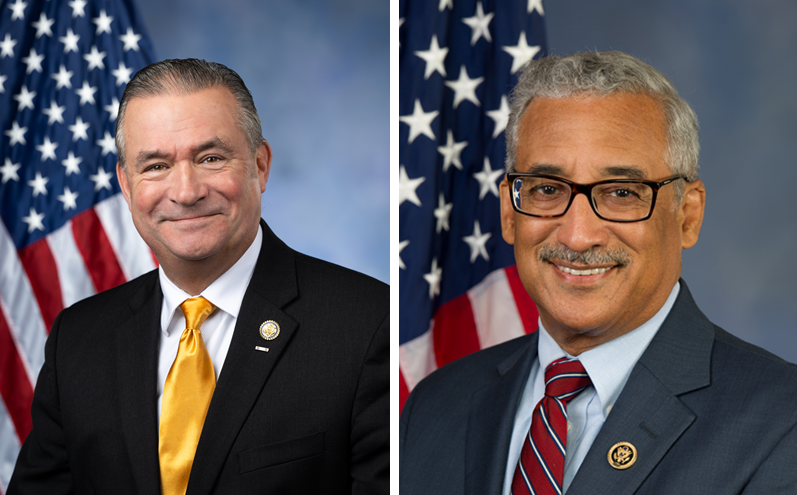
Left to right: Congressmen Don Bacon (R-NE) and Bobby Scott (D-VA)
Led by Congressmen Don Bacon (R-NE) and Bobby Scott (D-VA), 80 House members signed a letter supporting continued JMHCP funding. The program drives innovative cross-system collaboration between criminal justice and mental health systems to improve outcomes for people with mental health disorders or co-occurring substance use disorders who come into contact with the justice system.
This population is significantly overrepresented behind bars, with 37% of people in state and federal prisons and 44% of people in local jails having a history of mental health disorders.
To address this, JMHCP supports a range of research-based strategies, including mental health courts, mobile crisis teams, reentry services, and suicide prevention initiatives, and allows jurisdictions to determine where along the criminal justice continuum these approaches can have the greatest impact.
As a result, JMHCP has improved treatment outcomes, increased public safety, and reduced state and local spending.
Read more about the Justice and Mental Health Collaboration Program.
Justice Reinvestment Initiative
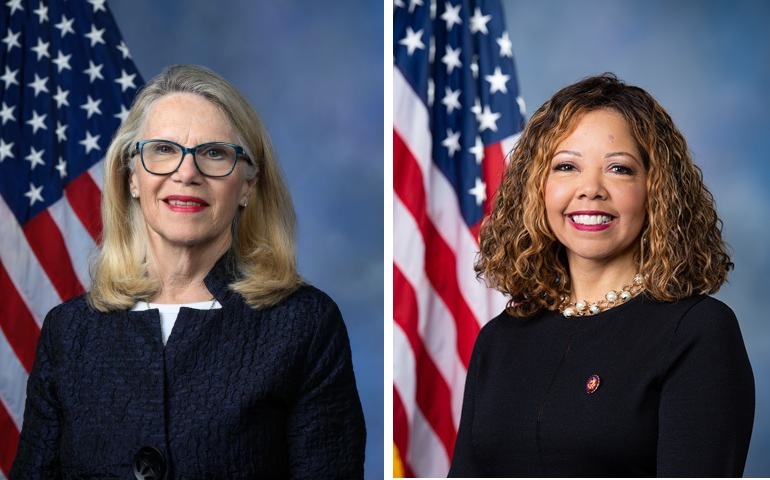
Left to right: Congresswomen Carol Miller (R-WV) and Lucy McBath (D-GA)
A bipartisan group of 44 House members, led by Congresswomen Carol Miller (R-WV) and Lucy McBath (D-GA), signed a letter calling for continued JRI funding. JRI enhances public safety through targeted work with states and criminal justice agencies to analyze cross-system data, implement tailored solutions to address complex criminal justice challenges, and improve coordination across agencies, helping states maximize resources and make safer communities.
JRI has helped states improve supervision and treatment resources for people at a high risk of reoffending, expand victim services, increase access to substance use disorder treatment, and strengthen law enforcement’s capacity to investigate and prevent violent crime.
States that have participated in JRI experienced, on average, a 29% drop in crime rates and a 10% decrease in recidivism between 2008 and 2019. By helping policymakers identify behavioral health needs and crime drivers specific to their communities, JRI delivers targeted, lasting impact.
Read more about the Justice Reinvestment Initiative.
Application deadlines range from September 24–October 13, 2026.
Read More
DOJ Announces $216M in Federal Funding Opportunities for Reentry Programs, Crisis Response Training, Substance Use and Mental Health Treatment
Application deadlines range from September 24–October 13, 2026.
Read More