









Connecticut Launches Innovative Police Training Program on Community Engagement
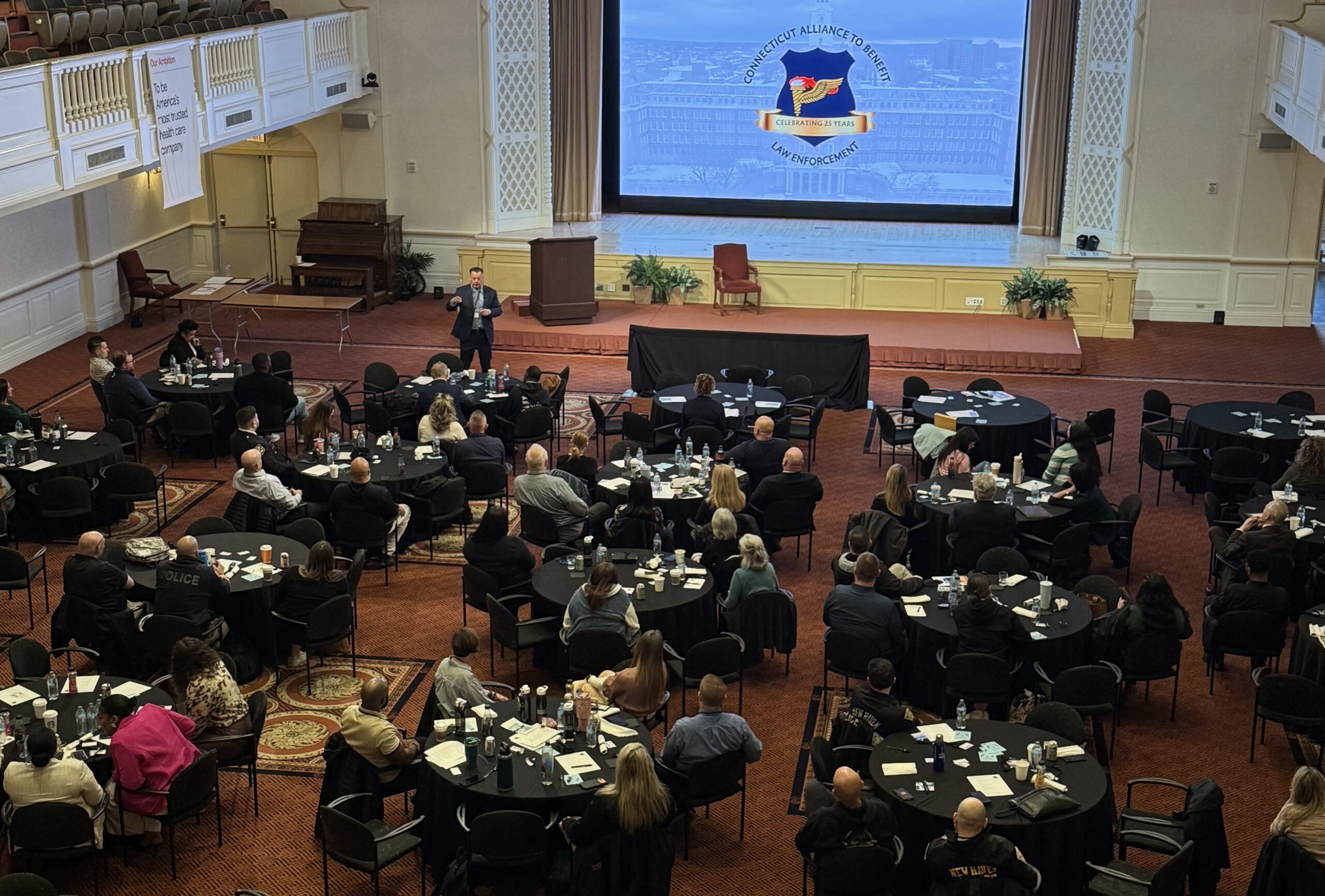
Ernest Stevens of the CSG Justice Center speaking to a conference room of police officers in Connecticut. (Photo Credit: Captain Mike Fumiatti/New Haven Police Department)
Roughly 1 in every 5 Americans comes into contact with law enforcement in a given year.
Because of that reality and public demand for police reforms, states like Connecticut have advanced police accountability laws with bias training and community-centered policing requirements for their officers.
Now, with support from the state, the CSG Justice Center is working with The Justice Collaboratory at Yale Law School to develop and implement a unique community engagement training program for law enforcement units statewide—the first of its kind for Connecticut.
“Our goal is to turn research into practical, field-ready strategies that help officers make better decisions, build strong trust with their communities, and improve outcomes across the justice system,” said Ernest Stevens, a managing director at the CSG Justice Center. “By combining evidence-based policy with real-world implementation support, this initiative ensures that agencies get high-quality training and the tools to sustain meaningful improvements over time.”
“A Model for All Other States”
The training program will roll out in three phases that include curriculum development, implementation, and training of the trainers who will train the officers, plus a final report with outcomes and recommendations. It aims to improve police transparency in community interactions, reduce law enforcement bias and disparities in their decisions, and strengthen long-term public confidence in law enforcement across Connecticut.
The curriculum development phase began in February. CSG Justice Center staff are now working to incorporate community and law enforcement input as they build an evidence-based curriculum centered on the three pillars of the National Initiative for Building Community Trust and Justice: procedural justice, implicit bias, and reconciliation—that is, rebuilding trust among police and community members, particularly where there has been a history of strained relationships and abuse.
Once the final curriculum has been approved by the Connecticut Office of Policy and Management, the CSG Justice Center will work with The Justice Collaboratory to begin phase two of the project: implementation.
“As leaders in trust and legitimacy research, The Justice Collaboratory is honored to partner with the state of Connecticut on this initiative. We believe that this curriculum will be a model for all other states looking to increase legitimacy, trust, and effectiveness for law enforcement,” said Caroline Nobo, executive director of The Justice Collaboratory.
Interested in starting a similar program?
The CSG Justice Center can help your state launch a similar training program for police—whether it focuses on community policing, crisis intervention, or other evidence-based methods of improving crisis response and making communities safer.
ABOUT THE AUTHOR