









The Consensus Project Report
Criminal Justice / Mental Health Consensus Project
The Criminal Justice / Mental Health Consensus Project is a unique effort to define the measures that state legislators, law enforcement officials, prosecutors, defense attorneys, judges, corrections administrators, community corrections officials, and victim advocates, mental health advocates, consumers, state mental health directors, and community-based providers agree will improve the response to people with mental illness who are in contact (or at high risk of involvement) with the criminal justice system.
The target audience of the Consensus Project Report is those individuals who can be characterized as agents of change: state policymakers who can have a broad systemic impact on the problem and an array of practitioners and advocates who can shape a community’s response to the problem. Legislators, policymakers, practitioners, and advocates can champion the detailed recommendations in the report knowing that each has been developed and approved by experts from an extraordinarily diverse range of perspectives who work in and administer the department, agencies, and organizations trying every day to address the needs of people with mental illness involved (or at risk of involvement with) the criminal justice system.
The Consensus Project Report addresses the entire criminal justice continuum, and it recognizes that actions taken by law enforcement, the courts, or corrections have ramifications for the entire criminal justice system. The report also recognizes that people with mental illness who are involved with the criminal justice system live in or return to communities, each of which has distinct issues, challenges, assets, and potential solutions to enable people with mental illness to avoid or minimize involvement with the criminal justice system.
The report provides 47 policy statements that can serve as a guide or prompt an initiative to improve the criminal justice system’s response to people with mental illness. Following each policy statement is a series of more specific recommendations that highlight the practical steps that should be taken to implement the policy. Woven into the discussion of each recommendation are examples of programs, policies, or elements of state statutes that illustrate one or more jurisdiction’s attempt to implement a particular policy statement. While promising, many of these initiatives are so new that they have yet to be evaluated to certify their impact on individuals and systems. Still, they demonstrate how partnerships and resourcefulness can be successfully replicated or tailored to the unique needs of a variety of communities. These examples should also help communities to build on the achievements without duplicating the failures or inefficiencies of others.
State and local government officials and community leaders can use these policy statements, recommendations, and examples to get beyond discussing the issue and to begin developing initiatives that will address the problem.
As the Stepping Up initiative marks its 10th year, America’s justice and behavioral health systems are facing a…
Read More
On June 26, the CSG Justice Center convened state leaders in workforce development, education, and corrections from 7…
Read More
While corrections agencies across the country collect vast amounts of data and make significant investments in…
Read More
The 10-Year Impact—and Future—of Stepping Up: Facing the Behavioral Health Crisis in Jails and Communities with Real Solutions
As the Stepping Up initiative marks its 10th year, America’s justice and behavioral health systems are facing a shared crisis: how to meet the behavioral health needs of people cycling through jails.
Read More
Breaking Down Barriers: Reentry 2030 States Meet to Tackle Employment-Related Collateral Consequences
On June 26, the CSG Justice Center convened state leaders in workforce development, education, and corrections from 7 Reentry 2030 states for the second session of the Reentry 2030 Workforce Development Peer Learning Cohort.
Read More
How Embedded Data Analysts Are Transforming State Corrections Systems
While corrections agencies across the country collect vast amounts of…
Read More A “Once in a Generation Opportunity” to Improve Reentry for Nearly 2 Million People
19 states were recently granted permission by CMS to reimburse critical reentry services with Medicaid funding for up to 5 years.
Read More First-of-its-Kind Plan for States to Support Children and Families with Incarcerated Parents
Our plan—developed with the National Resource Center on Children & Families of the Incarcerated at Rutgers University-Camden and the Institute for Municipal and Regional Policy at UConn—provides evidence-based, trauma-informed strategies for corrections leaders and policymakers to strengthen parent-child connections and reduce recidivism.
Read More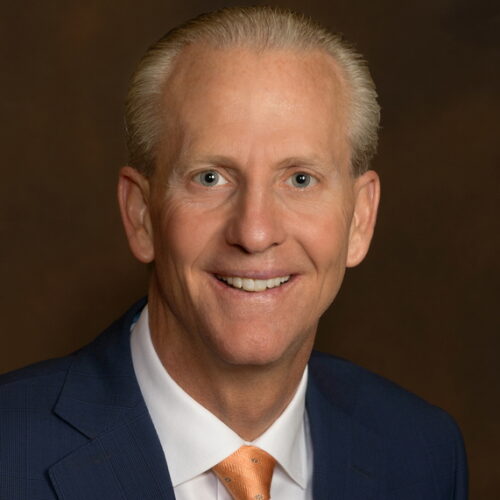 Breaking the Cycle of Homelessness and Incarceration: Q&A with New CSG Justice Center Advisory Board Member Wayne Niederhauser
The CSG Justice Center Advisory Board establishes the policy and project priorities of the organization. The board features a cross-section of leaders who shape criminal justice policy in various parts of the country.
Read More