








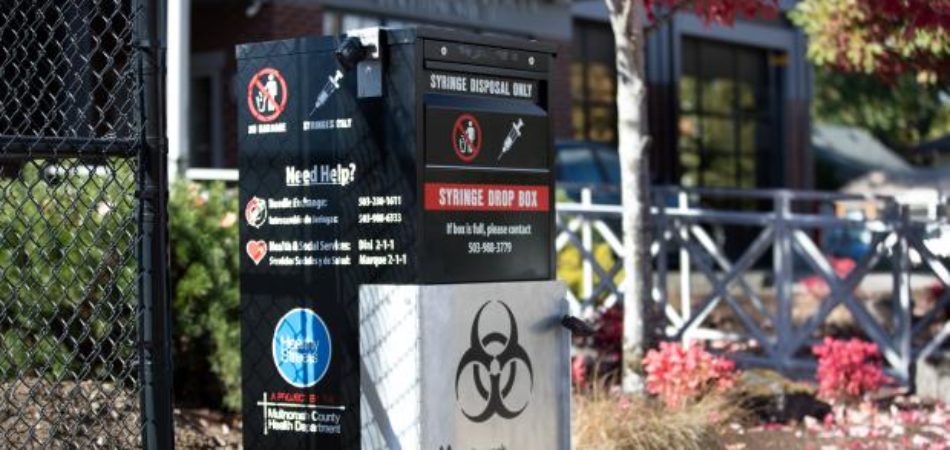

Opioid Addiction and the Criminal Justice System
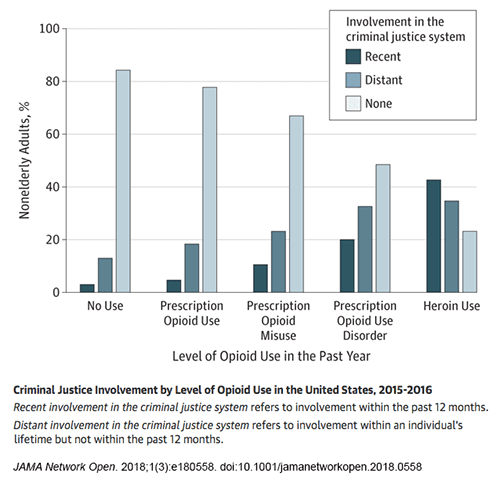 Each year, the increasing number of people who have opioid addictions impacts communities across the United States. In 2016, substance overdoses (fueled by opioid addictions) surpassed death by car accidents and guns as the leading cause of death for Americans under 50 years old, and in 2017, 134 people died each day from opioid overdose. Opioid use has a significant correlation to criminal justice involvement, and the consequences of opioid addictions can impact everyone from the people seeking recovery to law enforcement first responders, correctional facility staff, and reentry professionals. Despite efforts to promote recovery and reentry, when people who have opioid addictions are released from prison or jail, they often face a significantly higher risk of overdose and overdose-related death than people who were never incarcerated. In North Carolina alone, the risk of overdose death from opioids was 40 times higher for people released from incarceration in state facilities than it was for the general population in the state.
The resources below are designed to assist correctional agencies, community-based treatment providers, probation and parole agencies, and other service providers in better responding to people who have opioid addictions who are in the criminal justice system.

You might also be interested in

Reentry 2030 States Explore Day 1 Employment Readiness After Incarceration
8 states gathered to discuss workforce solutions for formerly incarcerated people.
Read More
Local Criminal Justice System Innovations in Mental Health Services: Q&A with CSG Justice Center Advisory Board Member Dr. Doreen Williams
"It is the humane, person-centered approach that supports and stabilizes individuals, their families, and their communities."
Read More
2025 Nominations Now Open for Judges and Psychiatrists Improving Lives and Behavioral Health
The Judge Stephen S. Goss Memorial Award for Leadership has expanded to include Lifetime Achievement Awards and, in…
Read More
Reentry 2030 States Explore Day 1 Employment Readiness After Incarceration
8 states gathered to discuss workforce solutions for formerly incarcerated people.
Read More
Local Criminal Justice System Innovations in Mental Health Services: Q&A with CSG Justice Center Advisory Board Member Dr. Doreen Williams
"It is the humane, person-centered approach that supports and stabilizes individuals, their families, and their communities."
Read More
2025 Nominations Now Open for Judges and Psychiatrists Improving Lives and Behavioral Health
The Judge Stephen S. Goss Memorial Award for Leadership has expanded to include Lifetime Achievement Awards and, in 2024, the first-ever Team Collaboration Award.
Read More Senate Passes Second Chance Reauthorization Act of 2025
On October 9, 2025, the Senate passed the Second Chance Reauthorization Act of 2025 (S. 1843), which would continue critical recidivism-reduction and reentry services nationwide.
Read More CSG Justice Center Launches First-of-Its-Kind Statewide Crisis Intervention Teams (CIT) Technical Assistance Center
The CSG Justice Center has partnered with the Pennsylvania Commission on Crime and Delinquency and CIT International to launch a first-of-its-kind statewide Technical Assistance (TA) Center.
Read More