









5 Solutions for Overcoming Common Data Quality Challenges on Behavioral Health Calls for Service
A Guide for Emergency Communications and Law Enforcement Leaders
Introduction
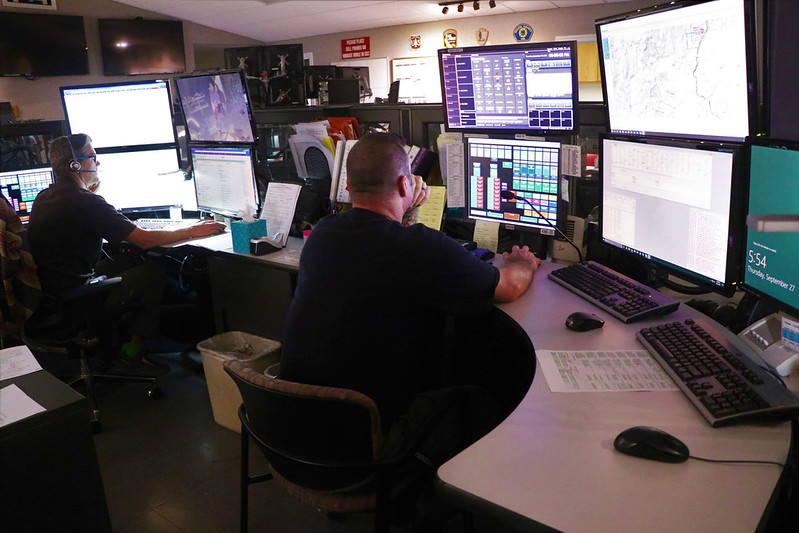
Thousands of 911 calls come in every day to over 5,000 Emergency Communications Centers (ECCs)—also known as Public Safety Answering Points—across the country. For each call, 911 professionals face a difficult question: Does this call have a behavioral health component to it?
Identifying behavioral health emergencies is only part of the challenge, however. Communities also need better data about behavioral health calls to understand how they provide the right response to the right call, whether that involves connections to 988, co-responder teams, or community response. Unfortunately, issues with data collection practices and technology systems create barriers to collecting actionable data to help guide and improve responses.
To help solve this problem, The Council of State Governments (CSG) Justice Center collaborated with ECCs, law enforcement professionals, national 911 experts, 988 liaisons, and alternative responders throughout the country to develop guidance on how to start, improve, and sustain efforts to collect better data on behavioral health calls for service.
Benefits of Collecting Better Data on Service Calls
Better data on behavioral health calls for service can help agencies:
- Understand the scope of behavioral health emergencies in your area, such as the frequency of such calls, when and where they commonly occur, and potential demographic disparities.
- Develop and strengthen policies and procedures for handling behavioral health calls that address the needs of people experiencing a behavioral health emergency.
- Make a case for additional resources to enhance community safety, such as updated technology systems, more or specialized staff, and cross-system training.
How to Collect Better Data on Behavioral Health Calls for Service
CHALLENGE 1: Jurisdictions often lack consistent and shared definitions to accurately describe behavioral health calls for service.
SOLUTION 1: Agree on what counts as a behavioral health call for service, then set a plan for data collection.
Work with your partners from local agencies to understand current data limitations, clarify what behavioral health information you need and why, and determine the technology you have available. With shared definitions and key metrics in place, a data collection plan sets your initiative up for success from the outset.
- Form a working group of decision-makers and IT staff from local emergency response agencies—such as emergency medical services (EMS), fire, and alternative response—to document the capabilities and limitations of each agency’s technology system, assess the need for new or updated data sharing agreements, and define cross-system data collection and sharing processes.
- Develop or update a policy that outlines shared commonly used definitions.
- Identify metrics to help measure behavioral health calls for service consistently.
Helpful Resources
No need to start from scratch on data sharing agreements, metrics, and shared definitions–here are some resources to guide you.
- Sample metrics like disposition/resolution of call and percentage of repeat callers are available from sources such as the Justice Counts initiative.
- Common definitions of serious mental illness, substance use disorder, homelessness, and recidivism can be found in the Aligning Health and Safety policy tool.
- Choosing the Right Data Strategy for Behavioral Health and Criminal Justice Initiatives details how project coordinators and research partners can identify, collect, and prioritize data for their initiatives.
CHALLENGE 2: Some leaders question the reliability of behavioral health calls for service data.
SOLUTION 2: Make it easy to record the right information.
Standardizing data collection practices can alleviate concerns that calls are not being recorded consistently or with efficacy. Certain technology features can also be used to facilitate consistent data collection and identification.
- Create clear procedures for call coding to standardize call documentation Procedures might include:
- Guidance on consistently using shorthand commands;
- Ways to document behavioral health information in call notes; or
- Instructing 911 professionals to always use behavioral health nature codes in the Computer Aided Dispatch (CAD) system. (A nature code is an acronym or other abbreviation used to describe the nature of the event that is being reported, such as a disturbance, theft, assault. 911 professionals assign each call with a nature code to reflect what is happening and prioritize the call for a specific response.)
- Determine whether your agency’s CAD system has the functionality to assign multiple nature codes to a call. Having the option to add more than one nature code can help 911 professionals and responding officers indicate when a call may have multiple issues occurring simultaneously, such as suspected criminal behavior but also a suspected or observed behavioral health issue. (Note: Adding additional features to or altering your CAD system may be an expensive option. Developing guidance on consistent note taking may be a more cost-effective option, if needed.)
- Identify and dedicate resources, such as training, supervision, and funding, to support staff in implementing new policies and procedures.
- AI can also be a useful tool to help with Some cities, like Denver and Seattle, are already beta testing software programs to aid in call identification.
CHALLENGE 3: Even with standardized coding in place, some agencies struggle to maintain consistency and accountability.
SOLUTION 3: Review calls for quality assurance (QA).
Call takers, dispatchers, supervisors, and responding officers may interpret situations differently, especially during high-stress or rapidly evolving incidents. Without structured QA practices, these inconsistencies can lead to inaccurate data, missed opportunities for learning, and difficulty identifying trends in behavioral health calls. But regular review can be used to hold staff and managers accountable, as well as show where more training and support is needed.
- Establish a dedicated QA team or role within your agency.
- Conduct reviews and QA of behavioral health calls for service and provide educational feedback to front-line staff on how the call was handled and coded.
- Train and empower on-the-floor leaders who can answer questions about data collection practices and support consistency among 911 professionals and responding officers.
CHALLENGE 4: Local leaders need trusted information to make targeted investments in public safety.
SOLUTION 4: Use data to understand trends and dispel misconceptions.
When data is trusted and kept up to date, it can be effectively used to inform policy decisions and ensure that the public’s needs are being met.
- Analyze and report regularly on behavioral health calls for service data.
- Share data and insights on behavioral health calls for service with staff within your agency, leaders in other agencies (such as state and local government, EMS/fire, alternative responders), and the public in an accessible This could be in the form of a regular report or public-facing dashboard.
- Consider partnering with a local university or a state agency to help with data aggregation, analysis, and reporting, if needed.
CHALLENGE 5: Agency staff are overworked and reluctant to learn new practices and protocols.
SOLUTION 5: Show, don’t tell, why quality data collection strengthens response systems.
By promoting an organizational culture that is receptive to better data collection practices within your agency, you can demonstrate the positive impacts on both your staff and the community.
- Develop messaging from agency leadership that emphasizes a commitment to data collection practices that support improved responses to behavioral health emergencies.
- Include 911 professionals and law enforcement officers in strategic planning on data collection policies and procedures.
- Complement policy and practice changes with positive staff recognition, such as employee-of-the-month programs, call-of-the-month accolades, or a public board that recognizes when a 911 professional did an exceptional job identifying and coding a behavioral health call for service.
Helpful Resources
The CSG Justice Center has several resources available on 911 dispatch call triage protocols, tips for successfully implementing a dispatch diversion program, and guidance on using data to inform decision-making around emergency response that can support your agency’s efforts to build improved responses to behavioral health emergencies and to collect and use data on behavioral health calls for service.
Project Credits
Writing: Ryan Carlino and Sean Justice, CSG Justice Center
Advising: Ernest Stevens and Hallie Fader-Towe, CSG Justice Center
Editing: Anne Ellis and Darby Baham, CSG Justice Center
Design: Jessica Rusher, CSG
Web Development: Caroline Cournoyer, CSG Justice Center
Public Affairs: Sarah Kelley, CSG Justice Center
Support for this project was provided by The Pew Charitable Trusts. Points of views or opinions are those of the authors and do not necessarily represent the official position or policies of The Pew Charitable Trusts or The Council of State Governments. Founded in 1948, The Pew Charitable Trusts uses data to make a difference.

New Jersey, Utah, Virginia, and Washington discuss their different "Aligning Health and Safety" approaches and some of the challenges they’ve experienced.
Read More
Applications are due Friday, July 31, 2026.
Read More
Getting the Right Response When Every Crisis Is Different: 4 States Share Lessons on Building Coordinated Crisis Systems
New Jersey, Utah, Virginia, and Washington discuss their different "Aligning Health and Safety"…
Read More
Apply Now to Pilot New Tool for Behavioral Health Interventions in Your County
Applications are due Friday, July 31, 2026.
Read More Health-Related Social Needs and Risk-Need-Responsivity: Mapping Where Medicaid and Criminal Justice Meet
Read More
Health-Related Social Needs and Risk-Need-Responsivity: Mapping Where Medicaid and Criminal Justice Meet
Read More
 What Police Departments Can Learn from San Antonio
Ernest Stevens, from the award-winning HBO documentary “Crisis Cops,” interviews Andrew Estrada…
Read More