








Financially Sustaining Behavioral Health-Criminal Justice Programs
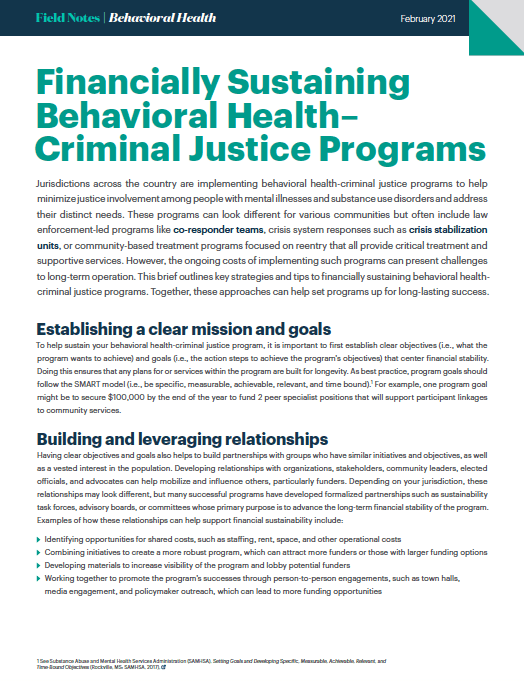
Financially Sustaining Behavioral Health-Criminal Justice Programs
For jurisdictions implementing behavioral health-criminal justice programs to help minimize justice involvement among people with mental illnesses and substance use disorders, the ongoing costs can present challenges to long-term operation. This brief outlines key strategies and tips to financially sustaining such programs so that they are built for longevity. Photo by Anna Earl on Unsplash.
Project Credits
Writing: Demetrius Thomas, CSG Justice Center
Research: Demetrius Thomas, CSG Justice Center
Editing: Darby Baham, Emily Morgan, CSG Justice Center
Design: Michael Bierman
Public Affairs: Ruvi Lopez, CSG Justice Center
Congressional leaders are urging appropriations for the Justice and Mental Health Collaboration Program (JMHCP) and the Justice Reinvestment…
Read More
Bipartisan House Coalition Backs Continued Funding for Key Public Safety and Mental Health Programs
Congressional leaders are urging appropriations for the Justice and Mental Health Collaboration…
Read More