








Stepping Up Pennsylvania: Findings and Recommendations from the Behavioral Health-Criminal Justice State Policy Scan Project
Stepping Up Pennsylvania: Findings and Recommendations from the Behavioral Health-Criminal Justice State Policy Scan Project
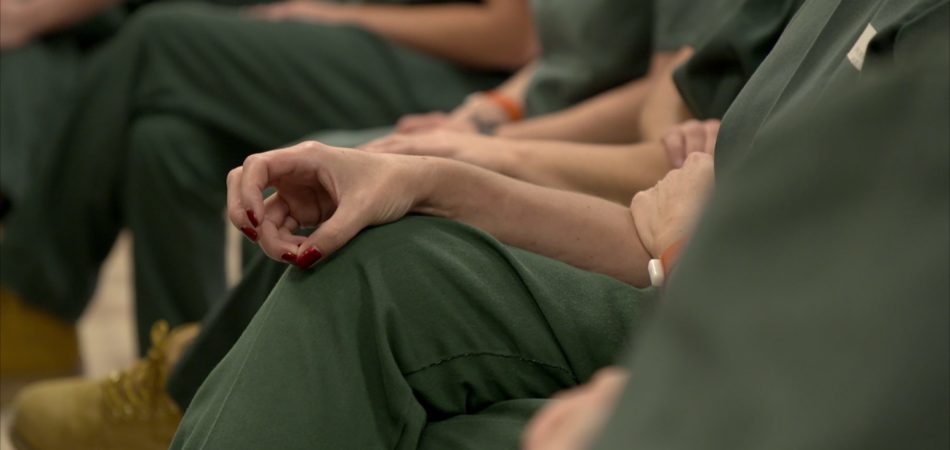
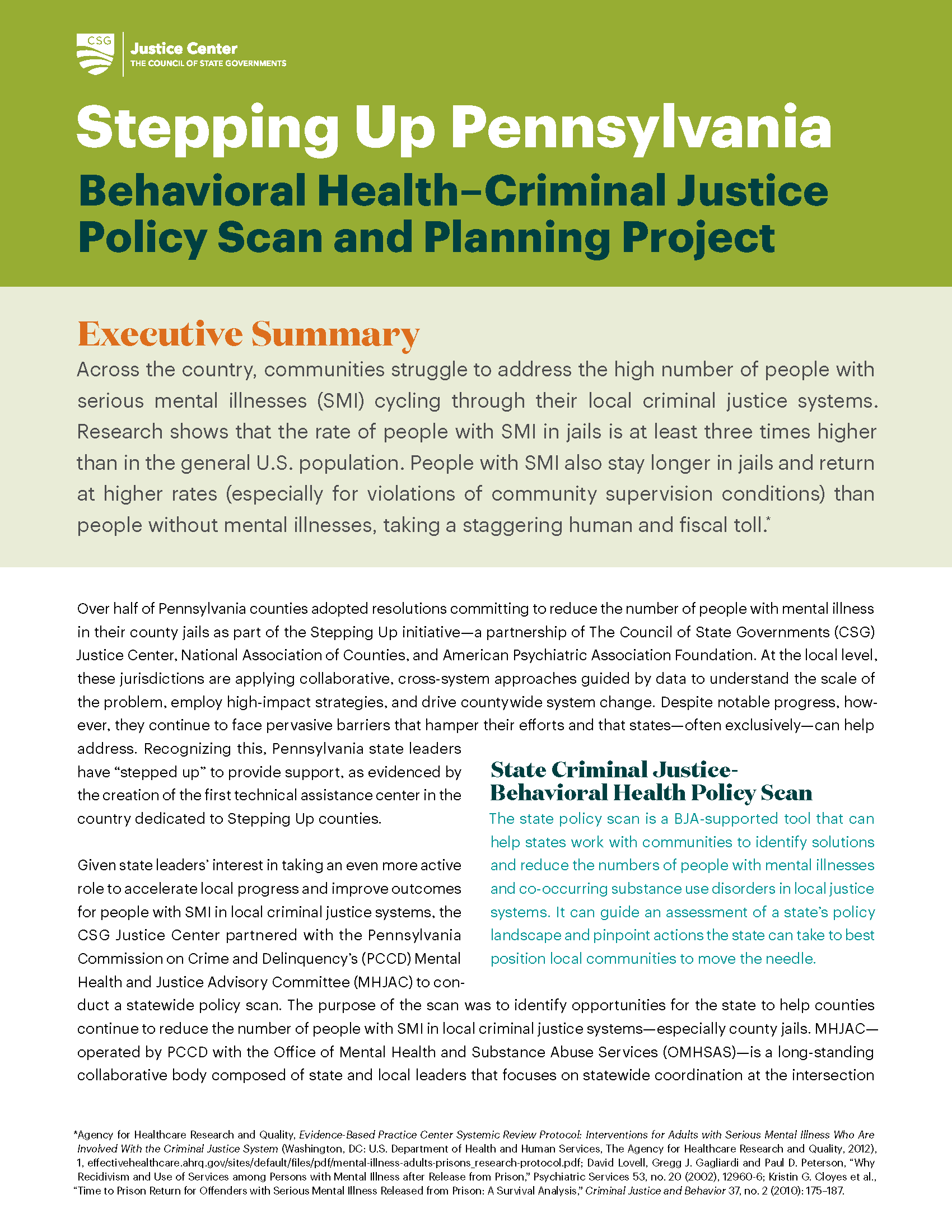
Across the country, communities struggle to address the high number of people with serious mental illnesses (SMI) cycling through their local criminal justice systems. The CSG Justice Center partnered with the Pennsylvania Commission on Crime and Delinquency’s (PCCD) Mental Health and Justice Advisory Committee to conduct a statewide policy scan. The purpose of the scan was to identify opportunities for the state to help counties continue to reduce the number of people with SMI in local criminal justice systems—especially county jails. CSG Justice Center staff made recommendations rooted in research and best practices with proposed action items. These recommendations focus on three priority areas: (1) improving local capacity to collect data and share information, (2) increasing local diversion as early as possible, and (3) increasing local availability of and connections to housing. (Photo credit: Schindlerdigital, CC BY-SA 4.0, via Wikimedia Commons)
ABOUT THE AUTHORS




Congressional leaders are urging appropriations for the Justice and Mental Health Collaboration Program (JMHCP) and the Justice Reinvestment…
Read More
They adapted our adult-focused framework that has been implemented in over 500 counties across the country.
Read More
Bipartisan House Coalition Backs Continued Funding for Key Public Safety and Mental Health Programs
Congressional leaders are urging appropriations for the Justice and Mental Health Collaboration…
Read More
Kansas Counties Pilot New “Stepping Up for Youth” Framework to Reduce Detention, Improve Behavioral Health Care
They adapted our adult-focused framework that has been implemented in over 500 counties…
Read More