







Behavioral Health Conference’s New “Criminal Justice Track” Emphasizes Collaboration with the Criminal Justice System to Improve Outcomes
The Council of State Governments Justice Center (CSG Justice Center), in collaboration with SAMHSA’s GAINS Center for Behavioral Health and Justice Transformation (GAINS), developed a new “Criminal Justice Track” at the National Council for Behavioral Health’s (NCBH) annual conference, which was held in Las Vegas, Nevada, April 8-10, 2013. With more than 3,500 participants, this conference represents the largest gathering of mental health and substance abuse treatment providers in the field. The conference track was designed to help facilitate collaboration among treatment providers and criminal justice professionals to improve outcomes for individuals with mental illnesses and/or co-occurring disorders involved in the criminal justice system.
Researchers estimate that nearly 17 percent of people admitted to jail have serious mental illnesses—rates three times higher for men and five times higher for women than in the general population. Nearly 70 percent of adults in jails have a substance use disorder, and almost three-quarters of jail inmates with serious mental illnesses (72 percent) have co-occurring substance use disorders. The substantial number of individuals who are served by the behavioral health system that are also involved in the criminal justice system have complex needs that cannot be adequately resolved by one system alone, prompting the need for effective partnership and collaboration between the two systems. Indeed, behavioral healthcare providers and criminal justice professionals across the country are already collaborating in various ways to keep these individuals out of the criminal justice system and advance their recovery. Yet despite these efforts, community-based treatment providers are increasingly serving clients who are involved with the criminal justice system and have risk factors that compromise their recovery, create stress for their families, and negatively impact public safety and government spending.
Eight sessions on the Criminal Justice Track were held at the NCBH conference, including a standing-room-only talk by Dr. Fred Osher, Director of Health and Services Systems Policy at the CSG Justice Center, and a plenary by Honorable Steven Leifman, Miami-Dade County Court Judge and Chair of the Florida’s Supreme Court Task Force on Substance Abuse and Mental Health Issues in the Court. The sessions gave practitioners and experts the opportunity to explore how the behavioral health system can partner with criminal justice to address these alarming trends.
“Our new criminal justice track at the conference proved to be a wonderful opportunity for community-based behavioral health providers to learn from national experts on how best to serve those in the criminal justice system who have behavioral health challenges,” said NCBH Executive Vice President Jeannie Campbell. “We were pleased to be able to partner with the Council of State Governments Justice Center and Policy Research Associates, Inc. to offer the cutting edge sessions.”
The sessions featured emerging research and best practices from the field, including real-world examples of collaboration among treatment providers and criminal justice professionals to develop cross-system strategies that advance public health and public safety goals and emphasize a shared understanding that each system has unique roles and responsibilities in addressing the needs of individuals involved with the criminal justice system. Speakers stressed the importance of applying the risk-need-responsivity principles to reduce recidivism and promote recovery. Speakers also introduced evidence-based practices and promising, recovery-oriented practices that improve outcomes for justice-involved individuals with behavioral health and criminogenic needs.
“Behavioral health professionals may not think that people with criminal histories are ‘their people,’ but the reality is that they are already serving them,” said GAINS Center Director Henry Steadman. “This track provides the opportunity to discuss overlapping populations in the behavioral health and criminal justice systems and how to provide the services many of these individuals need for recovery and to avoid reincarceration.”

Corrections leaders balance the complex priorities of maintaining public safety, operating secure facilities, providing needed care and services…
Read More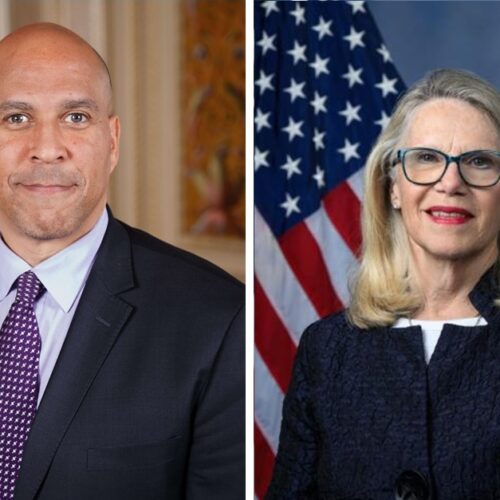
Today, Senators Shelley Moore Capito (R-WV) and Cory Booker (D-NJ) and Representatives Carol Miller (D-WV) and Danny K.…
Read More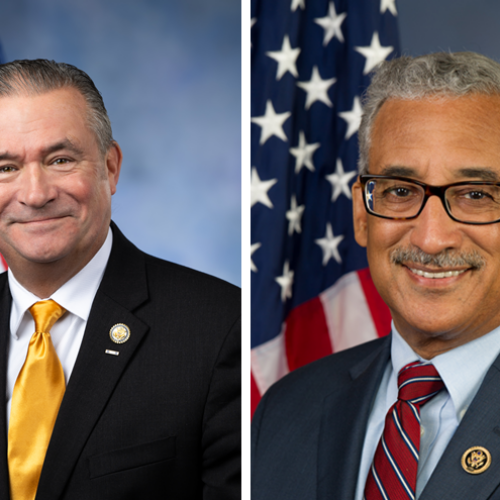
A bipartisan group of 66 lawmakers, led by Congressmen Don Bacon (R-NE) and Bobby Scott (D-VA), wrote a…
Read More
Apply Now for Resident Analyst Program to Increase Data Analysis Capacity at Departments of Corrections
Corrections leaders balance the complex priorities of maintaining public safety, operating secure facilities, providing needed care and services to the incarcerated population, and coordinating with other agencies.
Read More
Bipartisan Group of Lawmakers Introduces Second Chance Reauthorization Act of 2025
Today, Senators Shelley Moore Capito (R-WV) and Cory Booker (D-NJ) and Representatives Carol Miller (D-WV) and Danny K. Davis (D-IL) introduced the Second Chance Reauthorization Act of 2025 in both the Senate and U.S. House of Representatives.
Read More
Bipartisan Group of 66 Lawmakers Support Continued Funding for the Justice and Mental Health Collaboration Program
A bipartisan group of 66 lawmakers, led by Congressmen Don Bacon (R-NE) and Bobby Scott (D-VA), wrote a letter calling for continued funding for the Justice and Mental Health Collaboration Program (JMHCP) in the Fiscal Year 2026 Commerce, Justice, Science, and Related Agencies appropriations bill.
Read More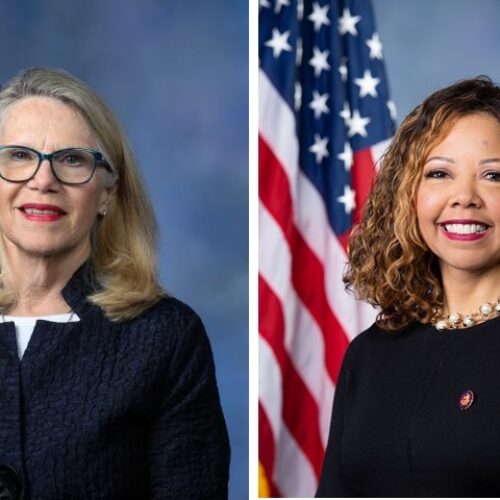 Bipartisan Group of 33 Lawmakers Promote Continued Funding for the Justice Reinvestment Initiative
A bipartisan group of 33 members of Congress, lawmakers, led by Congresswomen Carol Miller (R-WV) and Lucy McBath (D-GA), wrote a letter calling for continued funding for the Justice Reinvestment Initiative (JRI) in the Fiscal Year 2026 Commerce, Justice, Science, and Related Agencies Appropriations bill.
Read More New Alabama Employment Law Advances Reentry 2030 Goals
Alabama is taking action to achieve its Reentry 2030 goals and positioning itself as a leader in reentry.
Read More President’s FY26 Budget Maintains Funding for Key Justice and Behavioral Health Programs Amid Proposed Structural Changes
On May 30, 2025, the White House released the budget request for Fiscal Year (FY) 2026.
Read More