









U.S. Attorney General Lynch Emphasizes Access to IDs for People Leaving Prisons in #ReentryWeek Announcement
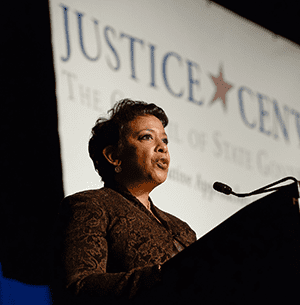 Kicking off the country’s first-ever National #ReentryWeek, U.S. Attorney General Loretta Lynch (left) invited states to partner with the U.S. Department of Justice (DOJ) in helping people returning home from federal prisons to “turn the page” on their criminal justice involvement.
In letters to all 50 governors, Lynch urged state governments to work with the DOJ to enable people leaving federal prisons to use their Bureau of Prisons inmate ID card and official release documentation to secure state-issued IDs. This step, she said, would “eliminate one of the most common and most harmful barriers to reentry across the United States,” and would help to standardize the process for providing people returning to the community after incarceration with identification.
“Even more important is the message that such a program would send to returning citizens: that they are welcome back into society…and that they can now, quite literally, exchange their old identity as a federal inmate for a fresh start,” said Lynch at a National Reentry Week event at the Philadelphia Housing Authority’s Raymond Rosen Manor on Monday.
To help educate state and local policymakers, the National Reentry Resource Center released a fact sheet this week highlighting the impact of, and models for, issuing state identification for people leaving prisons and jails across the country.
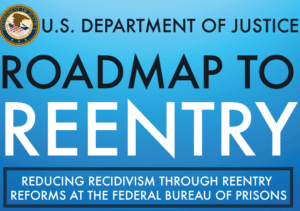 Lynch also announced the release of the DOJ’s Roadmap to Reentry, which identifies five evidence-based principles guiding federal efforts to improve the correctional practices and programs that govern the lives of people who will reenter society after incarceration. Those federal reforms will affect people from the day they begin incarceration through their first months after release.
“Our hope is that by expanding our approach to reentry and demonstrating what is possible at the federal level, we will ensure that our facilities support the needs of returning citizens and advance the continuing evolution of modern correctional practices, leading to safer neighborhoods and brighter futures at every level,” Lynch said.
U.S. Secretary of Housing and Urban Development Julian Castro also unveiled the Juvenile Reentry Assistance Program on Monday, which will help people under the age of 25 to clean their records, while President Obama honored the White House Champions of Change—leaders who have helped people involved with the justice system overcome barriers to employment—on Wednesday.
Lynch stressed that the Obama administration’s efforts to improve outcomes for people reentering society from incarceration will extend far beyond this week.
“Reentry isn’t just a ‘one day’ or ‘one week’ idea,” she said. “It is something that demands sustained commitment over time and that must be a part of our core corrections and rehabilitation mission.”
The CSG Justice Center Advisory Board establishes the policy and project priorities of the organization. The board features…
Read More
"AOT is a complex community intervention that can be effective or not depending on how it is implemented.…
Read More
8 states gathered to discuss workforce solutions for formerly incarcerated people.
Read More
Breaking the Cycle of Homelessness and Incarceration: Q&A with New CSG Justice Center Advisory Board Member Wayne Niederhauser
The CSG Justice Center Advisory Board establishes the policy and project priorities…
Read More
Involuntary Treatment for Patients in the Justice System: Q&A with Dr. Marvin Swartz
"AOT is a complex community intervention that can be effective or not…
Read More
Reentry 2030 States Explore Day 1 Employment Readiness After Incarceration
8 states gathered to discuss workforce solutions for formerly incarcerated people.
Read More Local Criminal Justice System Innovations in Mental Health Services: Q&A with CSG Justice Center Advisory Board Member Dr. Doreen Williams
"It is the humane, person-centered approach that supports and stabilizes individuals, their…
Read More 2025 Nominations Now Open for Judges and Psychiatrists Improving Lives and Behavioral Health
The Judge Stephen S. Goss Memorial Award for Leadership has expanded to…
Read More Senate Passes Second Chance Reauthorization Act of 2025
On October 9, 2025, the Senate passed the Second Chance Reauthorization Act…
Read More