









Apply Now to Join the Community Violence Intervention (CVI) Learning Community
********This application deadline has passed********
The Center for Policing Equity (CPE), in collaboration with The Council of State Governments Justice Center (CSG), is hosting a virtual learning community focused on establishing and supporting community violence intervention programs as alternatives to law enforcement systems. The learning community will be led by CPE policy and community engagement staff and include opportunities for mutual learning and presentations from various attendees and leaders in the field. Teams will work toward building, implementing, or enhancing community violence intervention programs and exploring pathways to prevent violent interactions and recidivism. Responses to violence will be framed by their root causes: internal family crises, public safety, health and educational systems that fall short, lack of economic investment, and ineffective transitional or reentry services. Upon completion of the learning community, teams will be equipped with an action plan, including an implementation and funding plan. To build the plan, teams will work through a planning and implementation guide that covers key topics such as goal setting, applying data, resource mapping, policy review, program development, and sustainability.
Community Violence Intervention Learning Community Session Dates:
- Thursday, November 17, 2022
- Thursday, January 19, 2023
- Thursday, March 16, 2023
- Thursday, May 18, 2023
- Thursday, June 29, 2023
All sessions will take place 2:00–4:00 p.m. ET via Zoom web meeting.
Teams that are interested in participating should submit this application by Wednesday, October 12, 2022. A CSG Justice Center staff member will follow up with you regarding application status by Thursday, October 20, 2022.
If you have any questions, contact Anne Larsen at alarsen@csg.org and/or attend the application drop-in office hours on Tuesday, October 4, 3:00–4:00 p.m. ET via Zoom.
Who should apply?
This learning community is open to teams that are hoping to build, implement, or enhance community violence intervention programs and explore pathways to prevent violent interactions and recidivism. Applicants must have a desire to utilize alternative approaches to community-level violence in lieu of a law enforcement response.
Who should participate?
Applicants are required to participate as an interdisciplinary team, with each team including representatives such as (1) one representative from a community-based program such as harm reduction services, peer supports or shelter/housing; (2) one city or county public health staff member; (3) one hospital or behavioral health representative; (4) one first responder to incidents of violence (e.g., law enforcement or existing community violence interrupter); (5) one community champion or advocate; and (6) a data representative.* Additionally, applicants are encouraged to include a person or family member who has experienced or been impacted by community-level violence; this representative may overlap with other required representatives. Six team members at most may actively participate in each session; additional team members may join to listen in.
*Note, the data representative will be the learning community’s point person for data collection related to the project. This person will be responsible for collecting data relevant to the learning community goals, will attend the learning community sessions with their team, and participate in the Data Collaborative Learning Community. The person serving as the data representative does not need to have any formal research or data education and can be one of the other required representatives.
Data Collaborative Learning Community Session Dates:
- Wednesday, January 11, 2023
- Wednesday, February 8, 2023
- Wednesday, March 8, 2023
- Wednesday, April 12, 2023
- Wednesday, May 10, 2023
What will the CVI Learning Community sessions cover?
Session 1: Introduction to CVI
This session will serve as an introduction and overview to the problem of community-level violence. This issue is felt broadly within cities but is often reduced to small geographic areas that are typically economically disadvantaged and historically disinvested, with fraught police-community relations. The session will address the importance of geographic community assessments and resource mapping to understand the communities that CVI programs seek to serve. Community engagement is fundamental to building community trust and buy-in and supporting leadership. Attendees will learn how to engage their community through listening and learning sessions, surveys, impacted community member interviews, and stakeholder focus groups. The session will also discuss the importance of surveying geographic, demographic, and incident nuances to best tailor community-based prevention and responses to violence.
Session 2: Public Health-Centered Approaches to Violence
This session will discuss public health-centered approaches like Cure Violence or Advance Peace, which interrupt further violence, reduce risk, and provide transformational opportunities to people involved in lethal firearms offenses. The session will also discuss Hospital-Based Violence Interruption Programs (HVIPs)—multidisciplinary programs that combine efforts of medical staff with trusted community-based partners to provide trauma-informed care to violently injured people. Finally, the session will discuss opportunities for recruitment and wellness of CVI practitioners to ensure that support systems endure for victims of vicarious trauma.
Session 3: Behavioral Change
This session will focus on strategies to impact behavioral change with a trauma-informed lens that accounts for root causes of violence. The session will discuss strategies such as cognitive behavioral therapy (CBT), which can be used to integrate emotional management to address conflicts constructively. Additionally, the session will discuss programmatic opportunities to provide mentoring, wraparound services, case management, and other opportunities for service provision in response to historic disinvestment and inequitable distribution of resources.
Session 4: Justice Partnerships
This session will focus on partnerships that more formally include law enforcement. Some cities around the country have found success by integrating law enforcement responses to violence with data collection and community partnerships. These programs aim to ensure that victims and survivors of violence have access to holistic services, legal aid, and assistance with state crime victim compensation program claims. This session will focus on opportunities for partnership, including data collection and sharing, with more traditional law enforcement partners such as police, sheriffs, district attorneys, and probation and correctional officials. Finally, the session will review shooting and homicide review commission model, a multidisciplinary and government-funded opportunity for homicide and violence prevention.
Session 5: Sustainability of CVI Programs through Administrative Transitions
This session will discuss how to establish and fund an office of violence prevention or neighborhood safety, independent city agencies staffed by civilians who coordinate violence prevention efforts citywide. The session will touch on state and national level advocacy to secure grantmaking programs to fund evidence-based approaches to preventing violence at the local level in addition to sustainably navigating administrative and political transitions.

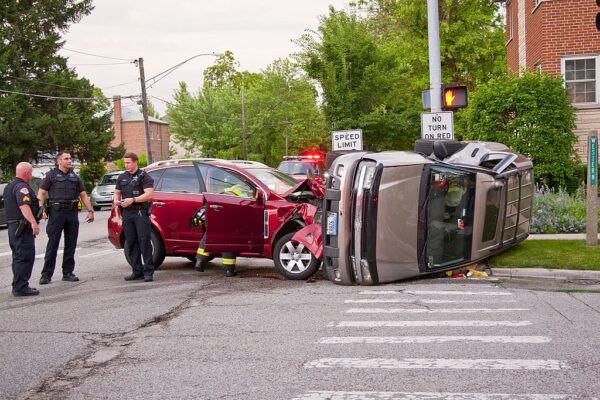

Photo by Rémi Walle on Unsplash

19 states were recently granted permission by CMS to reimburse critical reentry services with Medicaid funding for up…
Read MorePurpose of the Analysis This analysis, which accompanies our article, A “Once in a Generation Opportunity”…
Read More
Our plan—developed with the National Resource Center on Children & Families of the Incarcerated at Rutgers University-Camden and…
Read More
A “Once in a Generation Opportunity” to Improve Reentry for Nearly 2 Million People
19 states were recently granted permission by CMS to reimburse critical reentry services with Medicaid funding for up to 5 years.
Read More Methodology: Estimating the Opportunity of the 1115 Medicaid Reentry Waivers
Purpose of the Analysis This analysis, which accompanies our article,…
Read More
First-of-its-Kind Plan for States to Support Children and Families with Incarcerated Parents
Our plan—developed with the National Resource Center on Children & Families of the Incarcerated at Rutgers University-Camden and the Institute for Municipal and Regional Policy at UConn—provides evidence-based, trauma-informed strategies for corrections leaders and policymakers to strengthen parent-child connections and reduce recidivism.
Read More Breaking the Cycle of Homelessness and Incarceration: Q&A with New CSG Justice Center Advisory Board Member Wayne Niederhauser
The CSG Justice Center Advisory Board establishes the policy and project priorities of the organization. The board features a cross-section of leaders who shape criminal justice policy in various parts of the country.
Read More Involuntary Treatment for Patients in the Justice System: Q&A with Dr. Marvin Swartz
"AOT is a complex community intervention that can be effective or not depending on how it is implemented. The question about its effectiveness is better phrased as: for whom and under what conditions can AOT be effective?"
Read More Reentry 2030 States Explore Day 1 Employment Readiness After Incarceration
8 states gathered to discuss workforce solutions for formerly incarcerated people.
Read More