








Neighborhood-Based Supervision: A Review of Promising Practices
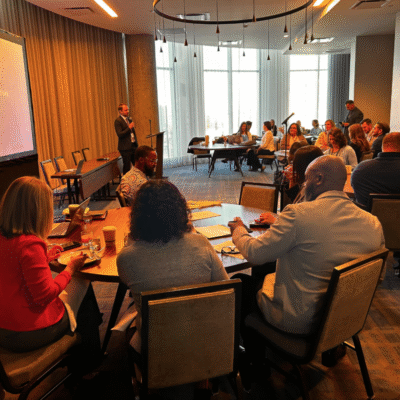
The practice of neighborhood-based supervision allows parole officers to interact closely with parolees within their social environment, as well as with community organizations and residents, providing them with insight into the parolees’ susceptibility to negative influences in the neighborhood. This webinar provided an overview of the research and practices of neighborhood-based supervision during the post-release stage of reentry. This webinar is particularly informative to parole offices in the field who work directly with parolees, field supervisors, community corrections administrators, other…
The practice of neighborhood-based supervision allows parole officers to interact closely with parolees within their social environment, as well as with community organizations and residents, providing them with insight into the parolees’ susceptibility to negative influences in the neighborhood. This webinar provided an overview of the research and practices of neighborhood-based supervision during the post-release stage of reentry. This webinar is particularly informative to parole offices in the field who work directly with parolees, field supervisors, community corrections administrators, other justice system personnel, and those working for community organizations with an interest in enhancing successful offender reentry strategies and initiatives. To download a PDF of the PowerPoint presentation used during this webinar, click here.
Find other events
You might also be interested in

The CSG Justice Center has partnered with the Pennsylvania Commission on Crime and Delinquency and CIT International to…
Read More

Our mission hasn’t changed; it’s become more essential. The following 2025 accomplishments are a testament to that enduring…
Read More CSG Justice Center Launches First-of-Its-Kind Statewide Crisis Intervention Teams (CIT) Technical Assistance Center
Read More
CSG Justice Center Launches First-of-Its-Kind Statewide Crisis Intervention Teams (CIT) Technical Assistance Center
Read More
 How Kentucky’s “Seth’s Law” Reduces Barriers to Care for Competency to Stand Trial and Guardianship
Read More
How Kentucky’s “Seth’s Law” Reduces Barriers to Care for Competency to Stand Trial and Guardianship
Read More