







Closer to Home: An Analysis of the State and Local Impact of the Texas Juvenile Justice Reforms
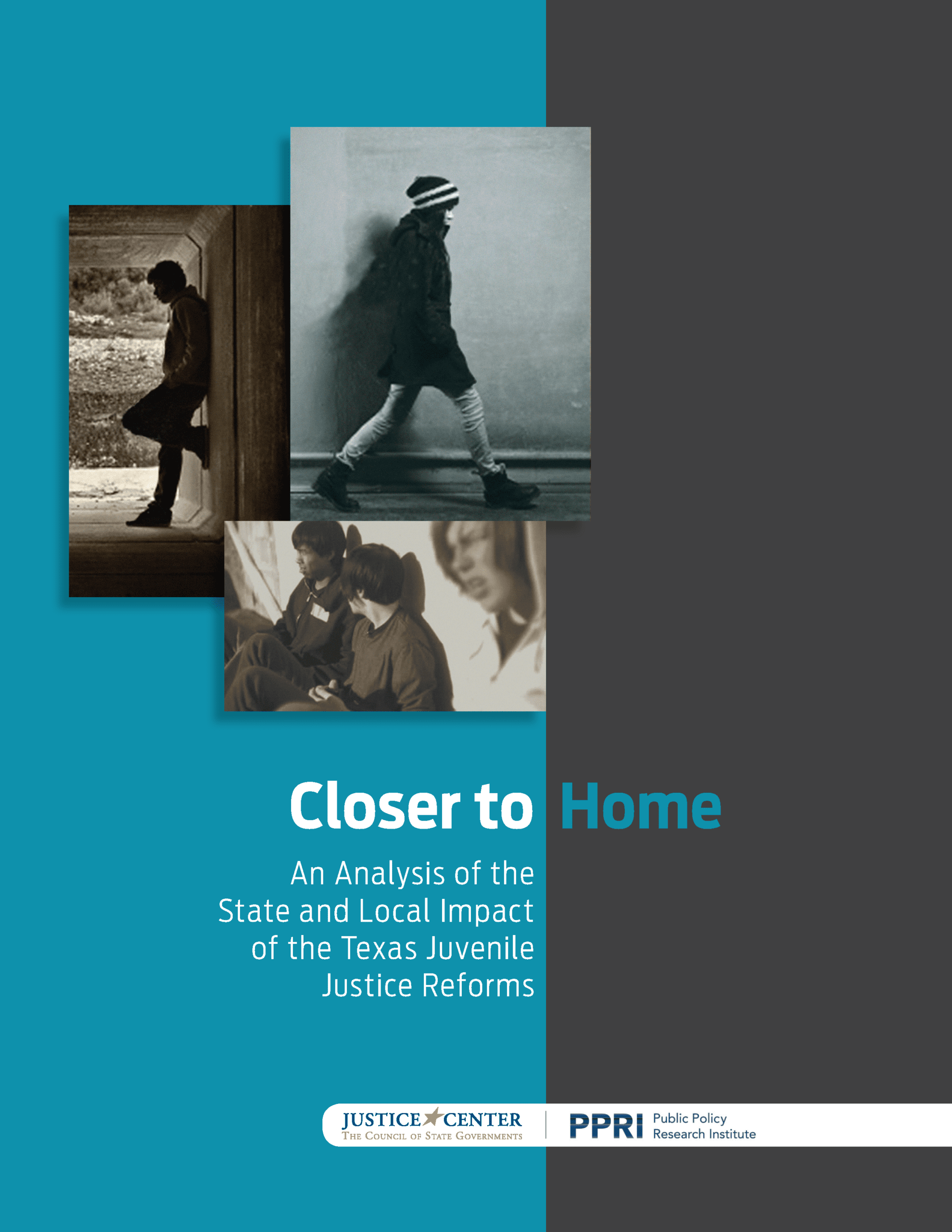
A first-of-its-kind study of Texas youth involved with the juvenile justice system shows that juveniles under community-based supervision are far less likely to reoffend than youth with very similar profiles who are confined in state correctional facilities.
Closer to Home: An Analysis of the State and Local Impact of the Texas Juvenile Justice Reforms, which draws on an unprecedented dataset of 1.3 million individual case records spanning eight years, shows youth incarcerated in state-run facilities are 21 percent more likely to be rearrested than those who remain under supervision closer to home. When they do reoffend, youth released from state-secure facilities are three times more likely to commit a felony than youth under community supervision.
The CSG Justice Center unveiled the report on Thursday, January 29, 2015, in a packed room of the Texas Supreme Court, alongside Tennessee Senate Majority Leader Mark Norris, who also serves as chair of CSG, Texas State Sen. John Whitmire, Texas Chief Justice Nathan Hecht, and a number of others.
“The extraordinary data compiled for this study demonstrates convincingly how much better youth—who prior to the reforms would have been incarcerated—fare instead under community supervision,” said Michael D. Thompson, director of the CSG Justice Center. “It also finds that for those youth placed under community supervision, there is still considerable room for improvement.”
The number of incarcerated youth has decreased by more than 40 percent across the nation—with some state populations declining by as much as 80 percent—since 2000, when the number of juveniles incarcerated was at a record high.in the U.S.

The CSG Justice Center has partnered with the Pennsylvania Commission on Crime and Delinquency and CIT International to…
Read More
Our mission hasn’t changed; it’s become more essential. The following 2025 accomplishments are a testament to that enduring…
Read More
CSG Justice Center Launches First-of-Its-Kind Statewide Crisis Intervention Teams (CIT) Technical Assistance Center
The CSG Justice Center has partnered with the Pennsylvania Commission on Crime and Delinquency and CIT International to launch a first-of-its-kind statewide Technical Assistance (TA) Center.
Read More How Kentucky’s “Seth’s Law” Reduces Barriers to Care for Competency to Stand Trial and Guardianship
Read More
2025 in Review: Justice Data and Solutions for State and Local Leaders Amid Federal Change
How Kentucky’s “Seth’s Law” Reduces Barriers to Care for Competency to Stand Trial and Guardianship
Read More
2025 in Review: Justice Data and Solutions for State and Local Leaders Amid Federal Change
Our mission hasn’t changed; it’s become more essential. The following 2025 accomplishments are a testament to that enduring focus.
Read More 25 Reentry Wins in 2025: How States Are Removing Barriers to Reentry Success
From new laws and reentry councils to increased funding and lowered barriers, these wins highlight collaboration, creativity, and innovation across our Reentry 2030 network.
Read More
Job Training in Prison: Reentry 2030 States Explore Innovative Models and Partnerships
State leaders gathered for the fourth session of the Reentry 2030 Workforce Development Peer Learning Cohort.
Read More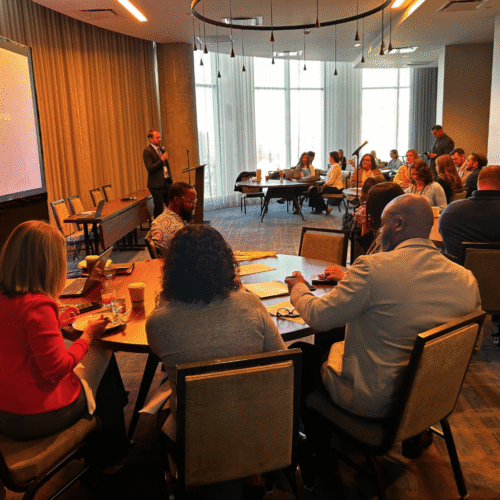 Getting the Right Response When Every Crisis Is Different: 4 States Share Lessons on Building Coordinated Crisis Systems
New Jersey, Utah, Virginia, and Washington discuss their different "Aligning Health and Safety" approaches and some of the challenges they’ve experienced.
Read More