







Innovations in Reentry
The Innovations in Reentry Initiative provides funding for local government agencies and federally recognized tribal governments to identify assets and gaps in their local reentry systems as well as develop capacity and partnerships with other justice agencies
to provide services that reduce recidivism and increase public safety. The U.S. Department of Justice’s Bureau of Justice Assistance (BJA) administers the awards.
Objectives and Deliverables
Grantees of this program are supported in the development of comprehensive and collaborative strategies to address reentry challenges for people who have been assessed as having a medium to high risk of recidivism. The Innovations in Reentry Initiative (formerly known as Smart Reentry, the Two-Phase Adult Reentry Demonstration Program, the Adult Offender Reentry Program for Planning and Demonstration Projects, and the Prisoner Reentry Initiative) is part of BJA’s Innovations in Public Safety suite of programs, which invest in the development of practitioner-researcher partnerships that use data, evidence, and innovation to assess problems and create strategies and interventions that are both effective and economical. Innovations in Reentry grantees must complete a planning phase and receive BJA approval to begin implementation of their strategic plans.
Allowable uses for grant funds include:
- Forming or supporting a reentry task force to develop a reentry strategic plan;
- Identifying and hiring a reentry coordinator to lead the task force;
- Assessing reentry partnerships in the community and identifying system gaps that have an impact on reducing recidivism;
- Collecting data for a jurisdiction, including who is returning from federal, state, and local incarceration yearly;
- Evaluating the jurisdiction’s approach to contracting reentry services and assessing whether or not contracted services in their jurisdiction are achieving positive results;
- Supporting a comprehensive range of reentry services that target criminogenic risk, including behavioral health programming; community supervision; educational, vocational, and employment services; and supportive housing;
- Targeting criminogenic needs through evidence-based interventions and services;
- Providing sustained case planning and management in the community;
- Providing staff training, coaching, and performance evaluations on newly adopted evidence-based practices;
- Developing both pre- and post-release services for program participants;
- Planning and implementing strategies to expand options for access to health benefits; and
- Developing or enhancing data systems.
For more information, see the most recent BJA grant solicitation and webinar.
Current and Past Grantees
BJA has awarded 180 grants for these reentry initiatives:
- 15 state, local, and tribal grants in 2009
- 20 state grants, 30 local grants, and 2 tribal grants in 2010
- 15 state and local planning grants and 23 state and local implementation grants in 2011
- 8 state and local planning grants and 11 state and local implementation grants in 2012
- 15 state and local grants in 2013
- 3 local grants, 4 state grants, and 1 tribal grant in 2014
- 4 state grants, 5 local grants, and 1 tribal grant in 2015
- 1 state grant, 4 local grants, and 1 tribal grant in 2016
- 4 state grants, 5 local grants, and 1 tribal grant in 2017
- 7 local grants in 2018
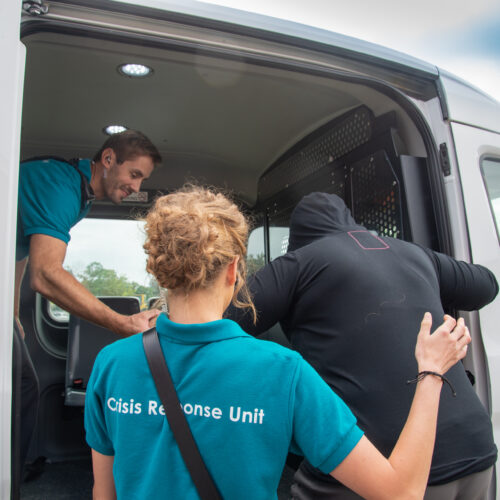
This May, the state of Washington passed legislation supporting the expansion of alternative response teams (sometimes called community…
Read More
The CSG Justice Center Advisory Board establishes the policy and project priorities of the organization. The board features…
Read More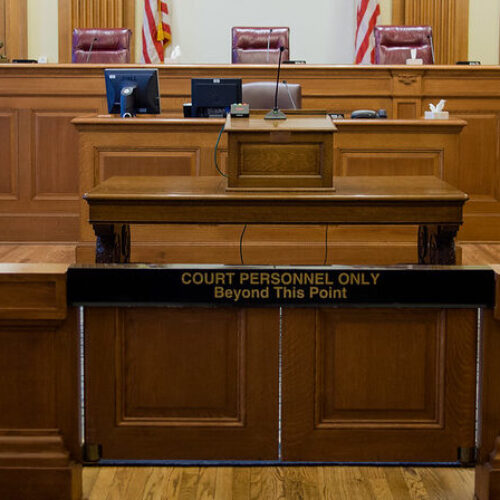
New Mexico launched a pilot program in 2024 to divert people with mental health needs and misdemeanor charges…
Read More
Developing a Common Definition for Community Responder Programs
This May, the state of Washington passed legislation supporting the expansion of alternative response teams (sometimes called community responders) as a public safety service.
Read More
Finding Solutions to Complex Criminal Justice Issues: Q&A with New CSG Justice Center Advisory Board Member Justice Briana Zamora
The CSG Justice Center Advisory Board establishes the policy and project priorities of the organization. The board features a cross-section of leaders who shape criminal justice policy in various parts of the country.
Read More
From Courtroom to Care: 5 Key Strategies Behind New Mexico’s Competency Diversion Pilot
New Mexico launched a pilot program in 2024 to divert people with mental health needs and misdemeanor charges out of the justice system and into care.
Read More The 10-Year Impact—and Future—of Stepping Up: Facing the Behavioral Health Crisis in Jails and Communities with Real Solutions
As the Stepping Up initiative marks its 10th year, America’s justice and behavioral health systems are facing a shared crisis: how to meet the behavioral health needs of people cycling through jails.
Read More Breaking Down Barriers: Reentry 2030 States Meet to Tackle Employment-Related Collateral Consequences
On June 26, the CSG Justice Center convened state leaders in workforce development, education, and corrections from 7 Reentry 2030 states for the second session of the Reentry 2030 Workforce Development Peer Learning Cohort.
Read More How Embedded Data Analysts Are Transforming State Corrections Systems
While corrections agencies across the country collect vast amounts of…
Read More