








On June 27-30, the City of San Antonio will host the 2013 National Alliance on Mental Illness (NAMI) National Convention, which will bring together nearly 2,000 attendees to discuss mental health issues, network, and gain inspiration. There are over 75 [...]
-
2013 JMHCP National Training and Technical Assistance Event
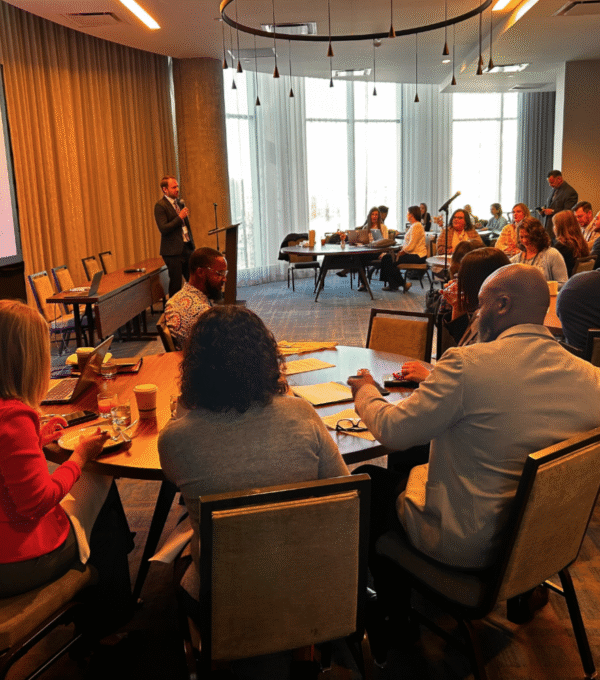
The CSG Justice Center, with support from the Bureau of Justice Assistance (BJA), convened more than 300 practitioners, researchers, and public officials for the Justice and Mental Health Collaboration (JMHCP) Program National Training and Technical Assistance Event, from [...] -
Criminal Justice/Mental Health Learning Sites
Since 2006, the CSG Justice Center to identify and highlight agencies from across the country with comprehensive and successful criminal justice/mental health programs that are willing [...] -
Adults with Behavioral Health Needs under Correctional Supervision
A New Collaborative Framework For Reducing Recidivism and Promoting Behavioral Health provided an overview of the report, “Adults with Behavioral Health Needs under Correctional Supervision". -
Technical Assistance (TA) to JMHCP Grantees
Since the release of its landmark Consensus Project Report in 2002, the Justice Center has provided on- and off-site technical assistance to states and localities working to ensure better public health and public safety outcomes for people with mental illnesses [...] -
Behavioral Health Framework
On September 27, 2012, the CSG Justice Center released Adults with Behavioral Health Needs under Correctional Supervision: A Shared Framework for Reducing Recidivism and Promoting Recovery.
2013 JMHCP National Training and Technical Assistance Event
Announcements
Two Second Chance Act Solicitations Released
Bureau of Justice Assistance Releases Second Chance Act Comprehensive Statewide Adult Recidivism Reduction Planning Program Grant Solicitation The U.S. Department of Justice’s Bureau of Justice Assistance recently released the solicitation for the Second Chance Act Comprehensive Statewide Adult Recidivism Reduction [...]
President Declares May Mental Health Awareness Month
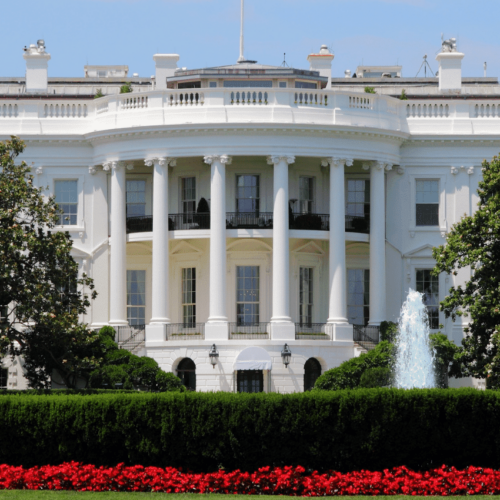
On April 30, 2013, the President Barack Obama declared May “National Mental Health Awareness Month.” By making the proclamation, the White House hopes to shed light on this issue and to “redouble our efforts to address mental health problems in [...]
Webinars
Use of Incentives and Sanctions to Promote Compliance with Supervision Conditions during Reentry: An Implementation Strategy
Hosted by the National Reentry Resource Center This webinar focussed on the use of incentives and sanctions with individuals under community supervision, particularly those returning to their communities from prison. It included an overview of current practices, policy, and research [...]
NRRC Webinar Innovations in Substance Abuse Treatment
Presenters review how adopting a “continuing care model” to treat substance use disorders can improve outcomes for individuals who are justice involved. Presenters also provide an overview of medications for the treatment of alcohol and opioid addiction, including how specific [...]
Creating a Strong Foundation for Effective Connections to Community Substance Abuse Treatment
This webinar was the first in a webinar series titled Best Practices for Engaging and Retaining Formerly Incarcerated Individuals in Community Substance Abuse Treatment. The webinar discussed how jurisdictions can create strong foundations for effective connections to community treatment through a [...]
Work Release Centers, Day Reporting Centers, and Halfway Houses: What Impact do They Have on Public Safety
This webinar will provide a general overview of work release centers, day reporting centers, and halfway houses. The presenter will discuss the specific target groups for which these sanctions are designed and how various jurisdictions identify and assign offenders to [...]
Mental Health Courts Research Roundup: Applying Research to Practice
This webinar, held on March 26th, 2013, provided an overview of emerging research about mental health courts and discussed its implications for mental health court practitioners and policymakers. During the webinar, mental health court researchers shared their findings and facilitated [...]
Effective Case Planning Strategies
Case plans provide a structured approach that helps supervising officers and probationers/parolees negotiate daily activities and achieve central reentry objectives. Effective case plans are dynamic instruments that organize a parolee or probationer’s behavioral expectations and are adapted according to his [...]
Recidivism Reduction Checklists: A Resource for State Corrections Agencies
Three checklists will be introduced during the webinar, each tailored to distinct audiences: Executive and Legislative Policymakers State Corrections Administrators State Reentry Coordinators During this invitation-only event, a distinguished panel of state corrections directors, policy staff, and state reentry coordinators [...]
Responding to the Second Chance Act Adult Grant Program
On January 22, 2013, the U.S. Department of Justice’s Bureau of Justice Assistance released the fiscal year 2013 solicitation for the Second Chance Act Adult Mentoring and Transitional Services for Successful Reentry Program. Nonprofit organizations and federally recognized Indian tribes [...]
Justice and Mental Health Collaboration Program Applicant
On January 24, 2013, the Department of Justice’s Bureau of Justice Assistance (BJA) released Justice and Mental Health Collaboration Program (JMHCP) grant applications. On February 19, 2013, the Council of State Governments Justice Center (CSG Justice Center) hosted a webinar [...]
Engaging and Involving Families of Justice-Involved Youth
This webinar, presented by the CSG Justice Center, features practical approaches to increasing and improving family engagement and involvement in the juvenile justice system. With support from the MacArthur Foundation, the National Center for Mental Health and Juvenile Justice has [...]
Publications
Implications of The Affordable Care Act on People Involved with the Criminal Justice System
Individuals involved with the criminal justice system face high rates of communicable and chronic diseases, mental illness, and substance use disorders. However, criminal justice practitioners often have difficulty connecting this largely low-income and uninsured population to the health services they [...]
A Checklist for Implementing Evidence-Based Practices and Programs for Justice-Involved Adults with Behavioral Health Disorders
The Substance Abuse and Mental Health Services Administration’s GAINS Center for Behavioral Health and Justice Transformation and the Council of State Governments Justice Center have prepared this easy-to-use checklist to help behavioral health agencies assess their utilization of evidence-based practices associated with positive public safety and public health outcomes.
Mentally Ill Offender Treatment and Crime Reduction Act Fact Sheet
Provides background on the legislation that authorizes federal grants to jurisdictions interested in developing collaborative criminal justice/mental health responses to people with mental illnesses. To download a PDF of the fact sheet, click here.
Exploring the Moderating Effects of Mental Illness on Parole Release Decisions
This study examined whether or not the factors that primarily influenced parole release decisions were similar for inmates with and without mental illness. The study concluded that the lack of any moderating effects of mental illness on the risk factors for recidivism explored in this study suggests that an inmate’s mental illness does not play much of a role in parole release decisions.
The Next Generation of Behavioral Health and Criminal Justice Interventions: Improving Outcomes by Improving Interventions
The purpose of this monograph is to suggest ways to build and improve upon first generation interventions and develop the “next generation” of behavioral health and criminal justice interventions — interventions that better address the multiple and complex needs of persons with SMI who are at risk of criminal justice involvement. To download this monograph, click here.
Frequently Asked Questions: Implications of Health Reform on Justice-Involved Populations
The document addresses the implications for justice-involved adults of the Patient Protection and Affordable Care Act and the Health Care (PPACA) and Education Reconciliation Act, signed into law by President Barack Obama in March 2010 and commonly referred to as the “health reform” law.
Responding to a High-Profile Tragic Incident Involving a Person with a Serious Mental Illness
The Justice Center partnered with the National Association of State Mental Health Program Directors (NASMHPD) on this toolkit, which combines practical tips, supported by relevant research, to manage a crisis involving a person with a history or current diagnosis of serious mental illness.
Information Sharing in Criminal Justice-Mental Health Collaborations
A guide intended to help criminal justice officials work with health professionals to better use both systems’ information, when appropriate, to reduce criminal justice involvement among people with mental illnesses and provide better links to treatment.
Effects of Cognitive-Behavioral Programs for Criminal Offenders
Cognitive-behavioral therapy (CBT) is among the more promising rehabilitative treatments for
criminal offenders. Reviews of the comparative effectiveness of different treatment approaches
have generally ranked it in the top tier with regard to effects on recidivism (e.g., Andrews et al.,
1990; Lipsey & Wilson, 1998). It has a well-developed theoretical basis that explicitly targets
“criminal thinking” as a contributing factor to deviant behavior (Beck, 1999; Walters, 1990;
Yochelson & Samenow, 1976). And, it can be adapted to a range of juvenile and adult
offenders, delivered in institutional or community settings by mental health specialists or
paraprofessionals, and administered as part of a multifaceted program or as a stand-alone
intervention. Meta-analysis has consistently indicated that CBT, on average, has significant
positive effects on recidivism. However, there is also significant variation across studies in the
size of those treatment effects. Identification of the moderator variables that describe the study
characteristics associated with larger and smaller effects can further develop our understanding
of the effectiveness of CBT with offenders. Of particular importance is the role such moderator
analysis can play in ascertaining which variants of CBT are most effective. The objective of this
systematic review is to examine the relationships of selected moderator variables to the effects
of CBT on the recidivism of general offender populations.
Impacts of Housing Supports: Persons with Mental Illness and Ex-Offenders
This report presents preliminary findings from a review of the literature on housing support programs for ex-offenders and persons with serious mental illness.
Recent headlines
Sequestration cuts put Veterans Court plans on hold
Living Lake Country By Steve Garrison Plans for a specialized, multi-county Veterans Treatment Court, meant to serve men and women of the armed forces who through criminal offenses find their way into the court system, have been put on hold. [...]
Yakima County Mental Health Court begins with one participant
KIMA TV By Sarah Navoy YAKIMA, Wash. — Yakima County’s Mental Health Court has had a little trouble getting out of the gate. Managers wanted 10 prisoners in the pilot program. Right now, there’s only one signed up to get [...]
House backs Mental Health Jail Diversion Program
The Texas Tribune By Brandi Grissome The House tentatively approved a bill Monday that would allow Harris County Jail to start a pilot program that officials hope would become a model for reducing mental illness in local lockups across Texas. [...]
McDowell opens 16th juvenile drug court in W.Va.
Associated Press WELCH, W.Va. (AP) – Supreme Court Chief Justice Brent Benjamin is in McDowell County to mark the opening of a new Juvenile Drug Court. The ceremony Monday afternoon in Welch also includes Circuit Judge Rudolph Murensky. The state’s [...]
Conn. lawmakers announce mental health proposal
Associated Press HARTFORD, Conn. (AP) — Relatives of the victims of the Newtown school shooting are calling on lawmakers to pass a child mental health bill before the legislative session ends in a little more than two weeks. Nelba Marquez-Greene, whose 6-year [...]
Jail fills mental health need, for better or worse
The Pantagraph By Edith Brady-Lunny The McLean County jail’s de facto role as Bloomington-Normal’s largest provider of residential mental health services fits a trend seen across the country — a troubling and unsatisfactory solution to the problem of helping those [...]
Officers train for dealing with the mentally ill
The Chicago Tribune By Dan Brannan Law enforcement officers frequently are thrust into crisis situations involving people affected by mental disorders. This week in Fairview Heights, area law enforcement officers received 40-hour Crisis Intervention Team training by a group led [...]
Mental health funding at risk
The Cincinnati Enquirer By Scott Wartman Some fear this year’s reforms to the state pension plan could lead to less treatment for the mentally ill and drug addicts and could reduce health department services. The reforms will require the state’s [...]
My Turn: Mental Health and Corrections
Burlington Free Press By Crystall Labounty In 2008 Sens Edward Kennedy (D-Mass.), Pete Domenici (R-N.M.), Patrick Leahy (D-Vt.) and Arlen Specter (R-Pa.), along with U.S. Reps Bobby Scott (D-Va.) and Randy Forbes (R-Va.) introduced the Mentally Ill Offender Treatment and [...]
Low Risk, High Cost: Should Non-Violent Elderly Inmates be Released Early?
Nebraska’s prisoners are rapidly graying, requiring more medical attention and taxpayer dollars than ever.