








This webinar provides an overview of “learning organizations” and presents examples of organizations within the criminal justice community as well as in other related fields to illustrate specific evidence-based strategies and practices that improve outcomes. Among the specific organizational aspects discussed are: staff recruitment, selection, training and assessment, organizational leadership and communication, best practice sharing, and quality assurance initiatives.
-
Federal Interagency Reentry Council
"Reentry provides a major opportunity to reduce recidivism, save taxpayer dollars, and make our communities safer.”—Attorney General Eric Holder of the The Federal Interagency Reentry Council. -
Recidivism Reduction Checklists: A Resource for State Corrections Agencies
The recidivism reduction checklists are a user-friendly, comprehensive source of information on the many policies and practices that go into a comprehensive, effective reentry initiative. There are three checklists, each tailored to a specific audience: Executive and Legislative Policymakers, State Corrections Administrators State Reentry Coordinators.
Federal Interagency Reentry Council
The National Reentry Resource Center provides education, training, and technical assistance to states, tribes, territories, local governments, service providers, non-profit organizations, and corrections institutions working on prisoner reentry. Learn more...
Quick Links
The Reentry Policy Council
The Reentry Policy Council was established in 2001 to assist state government officials grappling with the increasing number of people leaving prisons and jails to return to the communities they left behind. The Reentry Policy Council was formed with two specific goals in mind: to develop bipartisan policies and principles for elected officials and other policymakers to consider as they evaluate reentry issues in their jurisdictions and to facilitate coordination and information-sharing among organizations implementing reentry initiatives, researching trends, communicating about related issues, or funding projects.
The Reentry Policy Council is a national project coordinated by the Council of State Governments Justice Center, a national nonprofit organization that serves policymakers at the local, state, and federal levels from all branches of government. The Justice Center provides practical, nonpartisan advice and consensus-driven strategies – informed by available evidence – to increase public safety and strengthen communities.
The National Reentry Resource Center
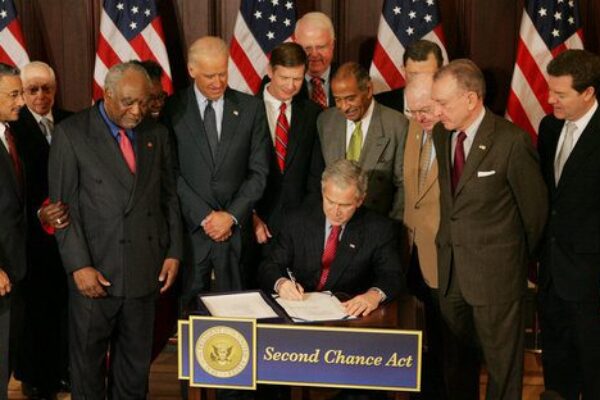
Funded by the Second Chance Act of 2008, and launched by the Council of State Governments Justice Center in 2009, the National Reentry Resource Center provides education, training, and technical assistance to states, tribes, territories, local governments, service providers, non-profit organizations, and corrections institutions working on prisoner reentry.
webinars
Use of Incentives and Sanctions to Promote Compliance with Supervision Conditions during Reentry: An Implementation Strategy
Hosted by the National Reentry Resource Center This webinar focussed on the use of incentives and sanctions with individuals under community supervision, particularly those returning to their communities from prison. It included an overview of current practices, policy, and research [...]
Work Release Centers, Day Reporting Centers, and Halfway Houses: What Impact do They Have on Public Safety
This webinar will provide a general overview of work release centers, day reporting centers, and halfway houses. The presenter will discuss the specific target groups for which these sanctions are designed and how various jurisdictions identify and assign offenders to [...]
Recidivism Reduction Checklists: A Resource for State Corrections Agencies
Three checklists will be introduced during the webinar, each tailored to distinct audiences: Executive and Legislative Policymakers State Corrections Administrators State Reentry Coordinators During this invitation-only event, a distinguished panel of state corrections directors, policy staff, and state reentry coordinators [...]
Responding to the Second Chance Act Adult Grant Program
On January 22, 2013, the U.S. Department of Justice’s Bureau of Justice Assistance released the fiscal year 2013 solicitation for the Second Chance Act Adult Mentoring and Transitional Services for Successful Reentry Program. Nonprofit organizations and federally recognized Indian tribes [...]
Webinar: Offender Reentry in Indian Country & Native Communities Series: Sex Offender Management: Registration and Community Notification
This was the sixth of an eight-part webinar series originating from the Strategies for Creating Offender Reentry Programs in Indian Country publication. This webinar, sponsored by the U.S. Department of Justice; Indian Health Services, U.S. Department of Health and Human [...]
Webinar: Recidivism Reduction, Substance Use and Co-Occurring Disorders: What Does the Evidence and Practice Tell Us?
Treating substance use and co-occurring mental health disorders and matching treatment to the target population is essential for improving individual outcomes and public safety. In this National Reentry Resource Center webinar, held on September 8, 2011, the presenters — Dr. [...]
Webinar: Providing Effective Family-based Treatment Services for Justice-Involved Individuals
Research indicates the importance of including family members, including children, in the treatment process of a loved one who is incarcerated. Family-based treatment services should be an essential component of any reentry program in order to improve public safety outcomes [...]
Webinar: Innovations in Substance Abuse Treatment
On October 25, 2011 the National Reentry Resource Center sponsored this webinar in which presenters reviewed how adopting a “continuing care model” to treat substance use disorders can improve outcomes for individuals who are justice involved. Presenters also provided an [...]
Webinar: Offender Reentry in Indian Country & Native Communities: Sex Offender Management: Registration and Community Notification
This was the sixth of an eight-part webinar series originating from the Strategies for Creating Offender Reentry Programs in Indian Country publication. This webinar, sponsored by the U.S. Department of Justice; Indian Health Services, U.S. Department of Health and Human [...]
publications
Snapshot: Reservation Communities
The Reentry Council aims to identify the additional challenges faced by individuals reentering reservation communities due to the increased poverty and isolation often found there and to then identify and develop policies, programs, and services that will support the cultural-social fabric and increase the employment, education, [...]
Snapshot: Justice-Involved Veterans
Veterans are not overrepresented in the criminal justice system, but their numbers are significant. An estimated one of every ten criminal defendants and inmates has served in the U.S. military. Most justice-involved Veterans are likely eligible for health care and other benefits from the U.S. [...]
Snapshot: Education
In a major federal study of individuals released from state prisons, 94 percent of incarcerated adults nearing release identified education as a key reentry need. Most incarcerated adults did not complete high school, although many have subsequently earned equivalency diplomas. Education is a core [...]
Snapshot: Women and Reentry
Justice-involved females, like males, face a host of challenges when they leave jail or prison and return to their communities. However, the current systems do not always address the specific challenges faced by women. For example, while many justice-involved females struggle with both substance abuse [...]
Reentry Council Snapshots: Employment
Two out of every three men were employed before they were incarcerated, and many were the primary financial contributors in their households. Individuals who have been incarcerated can expect future annual earnings to be reduced by some 40 percent after [...]
Snapshot: Housing
Stable housing with appropriate supportive services is a key factor for those coming out of incarceration in preventing or ending homelessness and reducing recidivism. Reentry Council agencies are collaborating to advance policies, programs, and models that support stable housing and reentry services for those with criminal [...]
Snapshot: Public Safety
Approximately two million adults are incarcerated in state prisons and local jails, costing U.S. taxpayers more than $75 billion each year. The vast majority of these individuals eventually return to their home communities. In fact, each year nearly 700,000 individuals are released from state prisons; [...]
Snapshot: Child Support
The Child Support Program serves one in four of all children in the United States and one in two of all poor children and their families, serving those families from a child’s birth until adulthood. Child Support is a national program but policies [...]
Reentry MythBuster: On Student Records
MYTH: Transfer of individual student education information from local school systems to juvenile justice agencies is prohibited by FERPA.
FACT: FERPA allows educational institutions and agencies to disclose student’s education records, without parental consent, as long as certain conditions are met.
Reentry MythBuster: Children of Incarcerated Parents Series
The Reentry MythBuster Series from the Federal Interagency Reentry Council is intended to clarify federal policies that affect formerly incarcerated individuals and their families. To view a PDF of the MythBusters in this series, click here.
Recent headlines
Ex-offenders face tens of thousands of legal restrictions, bias and limits on their rights
Since the mid-1980s, the number of official collateral consequences has expanded dramatically. Some estimates speculate that today’s ex-offenders could face up to 50,000 legally mandated collateral consequences, including restrictions on housing, employment, public benefits and immigration. More and more stakeholders are now calling for reform to remove collateral consequences. By creating obstacles between ex-offenders and a new life, advocates say, collateral consequences may even encourage recidivism.
Turning Lives Around, and Saving the State Money
Under Gov. David A. Paterson, the New York State Legislature passed reforms in 2009 that permitted judges to find some place other than prison for people like Mr. Ramos. He was one of the first 1,400 serious offenders whose cases went to new drug diversion courts, which provisionally sentence the defendants to rigorous treatment programs and monitoring, while keeping the threat of prison as leverage.
Juveniles serving life sentences could become parole eligible under bill headed to Louisiana Senate
The Times-Picayune by Jeff Adelson Juveniles convicted of first- or second-degree murder would be allowed to seek parole under certain conditions under a bill approved by a Senate committee Tuesday. House Bill 152 by Rep. Chris Hazel, R-Pineville, is intended [...]
Pittsburgh’s U.S. Attorney urges employers to hire ex-offenders
Pittsburgh Post-Gazette by Rich Lord Private employers should consider following the lead of the cities of Pittsburgh and Philadelphia and “ban the box” that often prevents the hiring of felons, U.S. attorney David Hickton said Monday in a speech to [...]
Some felons could get records erased under bill heading to Michigan House
The Lansing State Journal by Kathleen Gray His name is Michael Jardine and he hates to admit it, but he’s a felon. Popped for a misdemeanor weapons violation in 2001 and a felony larceny in a building in 2004 — [...]
Group bangs the drums for imprisoned mothers
The Chicago Tribune by Kyle Jahner A group of about 50 demonstrators led by an activist couple combined a “Happy Mother’s Day” message with a protest over incarceration rates at the state prison for women in Raleigh. The group made [...]
New film titled ‘RELEASED’ tells the stories of ex-cons who turned their lives around after prison
New York Daily News by Clare Trapasso Casimiro Torres spent much of his troubled childhood bouncing between the care of his alcoholic mother and juvenile detention centers, sleeping on the streets and stealing food for his younger siblings. As an [...]
West Virginia bans sexting between juveniles while creating educational diversion program
The Huffington Post by Rebecca Klein While it is already illegal in West Virginia for adults to send sexually explicit text messages to minors, a new law in the state would punish juveniles for sexting with each other. Signed on [...]
Nation’s oldest prisoners may benefit from new outlook toward compassionate-release program
The Washington Post At age 88, John Rigas could be a poster child for inmates who might seek early release from prison because of the hazards of advanced aging. The former cable television mogul, convicted of fraud after his company [...]
Substance-abuse treatment program goals bring Republican Chris Christie, Democratic former N.J. Gov. Jim McGreevey together
The Daily News by Adam Edelman Chris Christie is reaching across the aisle again. The New Jersey Republican governor appeared on Wednesday with former Garden State governor Jim McGreevey, a Democrat, at a local jail to meet with a group [...]