











Law enforcement agencies have used police-mental health collaboration (PMHC) programs to help officers safely and effectively respond to calls for service involving people with mental illnesses for decades.
In 2016, the U.S. Department of Justice’s Bureau of Justice Assistance (BJA) launched an online toolkit in partnership with the CSG Justice Center that supports law enforcement agencies around the country in planning and implementing effective public-safety responses to people who have mental illnesses.
The PMHC Toolkit outlines the overall benefits of PMHC programs in five sections: learning about PMHC programs; planning and implementing; training; managing; and measuring.
In 2020, the CSG Justice Center launched the PMHC Self-Assessment tool to help law enforcement agencies and their behavioral health partners assess their progress toward implementing high quality partnership-based interventions. This tool is designed to provide resources to help improve responses to calls for service for people with mental illnesses and/or co-occurring substance use conditions.
PMHC Resources

In October 2020, Bexar County, Texas, officials launched the Specialized Multidisciplinary Alternate…
Read More
In this video, Chief Ron Thomas of the Denver Police Department (DPD)…
Read More
This handbook is designed to guide project coordinators through the process of…
Read More
This tool is designed to provide resources to help improve responses to…
Read More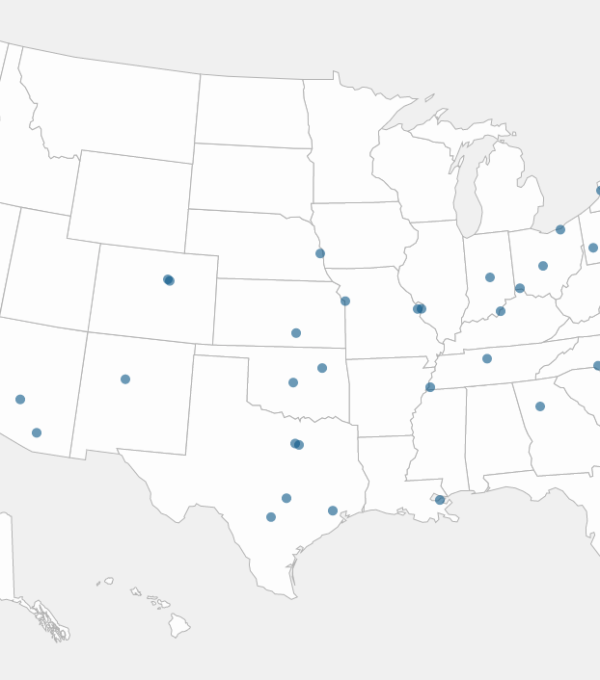
With support of the Bureau of Justice Assistance, the University of Cincinnati…
Read More



It would hardly be controversial to expect an ambulance to arrive if…
Read More
A three-digit crisis line, 988, launched two years ago to supplement—not necessarily…
Read More
The sharp rise in school shootings over the past 25 years has…
Read More
On March 9, 2024, President Joe Biden signed a $460 billion spending…
Read More
With support from the U.S. Department of Justice’s Office of Justice Programs’…
Read More
********This application deadline has passed******** With support from the…
Read MoreKey Staff