








School Discipline Consensus Report
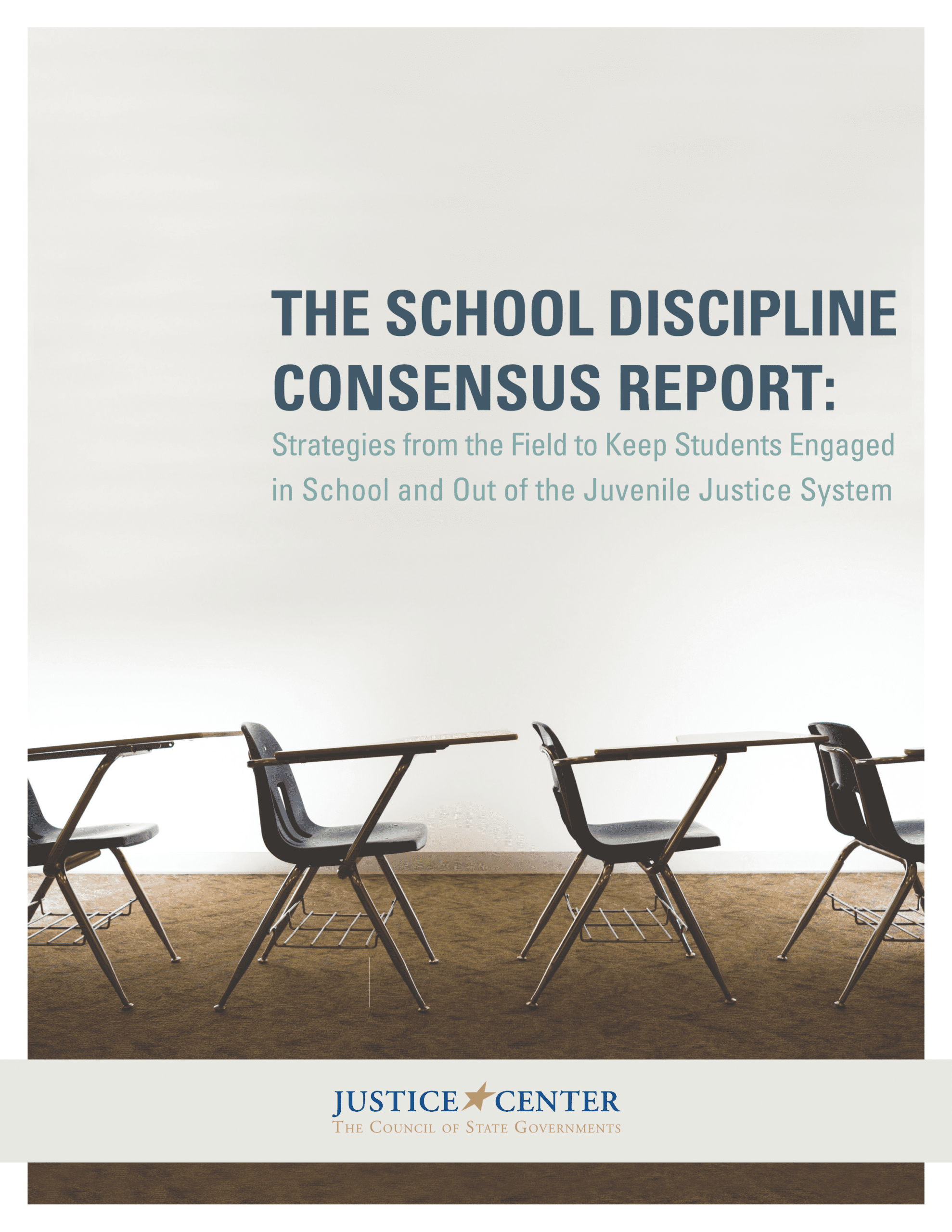
The School Discipline Consensus Report presents a comprehensive set of consensus-based and field-driven recommendations to improve conditions for learning for all students and educators, better support students with behavioral needs, improve police-schools partnerships, and keep students out of the juvenile justice system for minor offenses.
More than 100 advisors representing policymakers, school administrators, teachers, behavioral health professionals, police, court leaders, probation officials, juvenile correctional leaders, parents, and youth from across the country helped develop more than two dozen policies and 60 recommendations to keep more students in productive classrooms and out of court rooms.
An additional 600 individuals from various disciplines and perspectives shared examples of promising practices that are also presented in the report. The School Discipline Consensus Report draws on real-world strategies and research to promote truly multidisciplinary approaches to reducing the millions of youth suspended, expelled, and arrested each year while creating safe and supportive schools for all educators and students.
Project Engagement
Multidisciplinary advisory groups were convened to identify key issues related to academic success, juvenile justice concerns, and safe and engaging learning environments. The project team also held focus groups and listening sessions with youth and professionals from various disciplines to ensure that all perspectives and voices are heard in developing recommendations for keeping children in the classroom and out of the juvenile justice system whenever possible.




Webinars

Acknowledgements
This report is a product of the School Discipline Consensus Project, a component of the Supportive School Discipline Initiative of the U.S. Departments of Education and Justice.
The Supportive School Discipline Initiative was launched by the U.S. Attorney General and the U.S. Secretary of Education in July 2011 and supported by a public/private partnership that includes the Office of Juvenile Justice and Delinquency Prevention, NoVo Foundation, The California Endowment, and The Atlantic Philanthropies.

The CSG Justice Center has partnered with the Pennsylvania Commission on Crime and Delinquency and CIT International to…
Read More
Our mission hasn’t changed; it’s become more essential. The following 2025 accomplishments are a testament to that enduring…
Read More
CSG Justice Center Launches First-of-Its-Kind Statewide Crisis Intervention Teams (CIT) Technical Assistance Center
The CSG Justice Center has partnered with the Pennsylvania Commission on Crime and Delinquency and CIT International to launch a first-of-its-kind statewide Technical Assistance (TA) Center.
Read More How Kentucky’s “Seth’s Law” Reduces Barriers to Care for Competency to Stand Trial and Guardianship
Read More
2025 in Review: Justice Data and Solutions for State and Local Leaders Amid Federal Change
How Kentucky’s “Seth’s Law” Reduces Barriers to Care for Competency to Stand Trial and Guardianship
Read More
2025 in Review: Justice Data and Solutions for State and Local Leaders Amid Federal Change
Our mission hasn’t changed; it’s become more essential. The following 2025 accomplishments are a testament to that enduring focus.
Read More 25 Reentry Wins in 2025: How States Are Removing Barriers to Reentry Success
From new laws and reentry councils to increased funding and lowered barriers, these wins highlight collaboration, creativity, and innovation across our Reentry 2030 network.
Read More
Job Training in Prison: Reentry 2030 States Explore Innovative Models and Partnerships
State leaders gathered for the fourth session of the Reentry 2030 Workforce Development Peer Learning Cohort.
Read More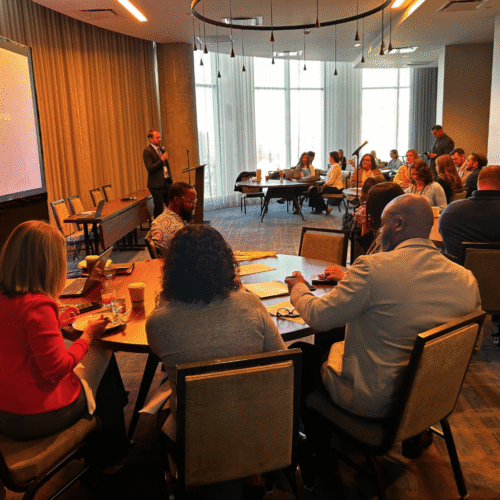 Getting the Right Response When Every Crisis Is Different: 4 States Share Lessons on Building Coordinated Crisis Systems
New Jersey, Utah, Virginia, and Washington discuss their different "Aligning Health and Safety" approaches and some of the challenges they’ve experienced.
Read More